
What's Happening?
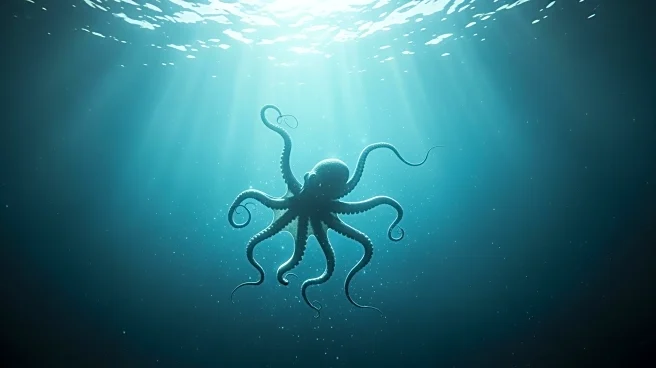
Scientists from the Monterey Bay Aquarium Research Institute (MBARI) have captured rare footage of a seven-arm octopus, scientifically known as Haliphron atlanticus, in Monterey Bay, California. This marks
only the fourth time in four decades that the research team has observed this species. The footage, recorded at a depth of approximately 2,300 feet, shows the octopus holding a red helmet jellyfish, a bioluminescent creature. The seven-arm octopus, despite its name, actually has eight arms, with males typically concealing one specialized arm used for mating. The species is known for its gelatinous diet and can grow up to 13 feet long, with females significantly larger than males. This discovery provides valuable insights into the diet and behavior of this elusive deep-sea creature.
Why It's Important?
The observation of the seven-arm octopus is significant for marine biology, offering insights into the biodiversity of deep-sea ecosystems. The discovery highlights the importance of deep-sea research in understanding marine life that remains largely unexplored. The findings could contribute to broader ecological studies, particularly in understanding the dietary habits and ecological roles of deep-sea species. This research underscores the need for continued exploration and conservation efforts in marine environments, which are critical for maintaining biodiversity and ecological balance.