






What's Happening?
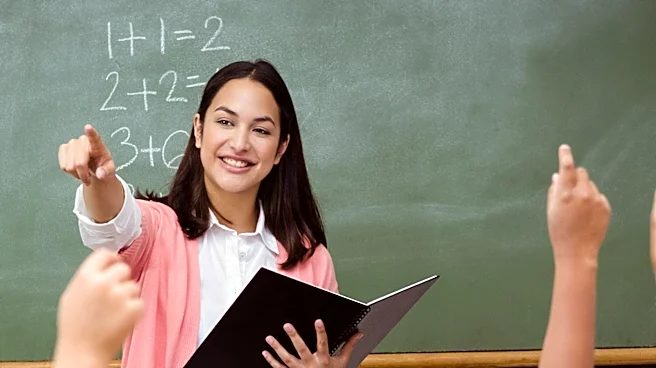
Minnesota has launched a new kindergarten assessment, the Minnesota Kindergarten Fall Assessment (MnKFA), which aims to provide a comprehensive snapshot of student capabilities upon kindergarten entry. Unlike traditional assessments, the MnKFA relies
on educators observing students during their normal daily routines rather than using computers or paper-based tests. This approach is designed to evaluate not only academic readiness but also social-emotional development and learning approaches. The assessment was developed following 2023 state legislation and is being piloted in 70 public schools across Minnesota. The initiative seeks to address the diverse backgrounds of students entering kindergarten and to provide a more inclusive and developmentally appropriate evaluation method.
Why It's Important?
The introduction of the MnKFA is significant as it represents a shift away from traditional readiness assessments that often place undue pressure on young children. By focusing on observational methods, the assessment aims to provide a more accurate reflection of a child's development and readiness for school. This approach could potentially influence educational practices by encouraging a more holistic view of student development, which may lead to better support for students from diverse backgrounds. The assessment's focus on social-emotional development and learning approaches highlights the importance of these areas in early childhood education, which could lead to more tailored educational strategies and resources.
What's Next?
As the MnKFA is piloted, Minnesota will gather data to evaluate its effectiveness and impact on educational practices. The results of this pilot could influence future educational policies and assessment methods not only in Minnesota but potentially in other states as well. Educators and policymakers will likely monitor the outcomes to determine if this approach leads to improved student support and outcomes. The success of the MnKFA could prompt other states to consider similar assessment models, potentially leading to a broader shift in how kindergarten readiness is evaluated across the U.S.