






What's Happening?
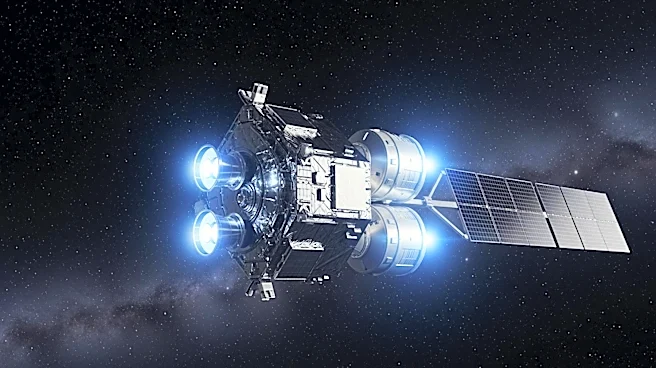
The Naval Postgraduate School (NPS) is leveraging its Mobile CubeSat Command and Control (MC3) network to advance space innovation through small satellites, known as CubeSats. The MC3 network, initially founded in 2011 with Department of Defense (DOD)
sponsorship, supports space operations and research by providing a low-cost, quick-launch alternative to traditional space operations. The network has grown to include nine tracking facilities across the United States and international locations, supporting nearly 40 spacecraft over more than 20 missions. The MC3 system is unique among academic institutions, allowing NPS to conduct space operations and foundational research while maintaining low costs. The network's interdisciplinary nature enables collaboration across various departments and with international partners, enhancing research opportunities for students and faculty.
Why It's Important?
The MC3 network's development is significant for the U.S. space industry and defense sectors, as it provides a cost-effective platform for space research and operations. By supporting CubeSat missions, the network allows for rapid deployment and experimentation, which is crucial for advancing military communications and national security. The network's ability to operate under DOD cybersecurity standards while remaining unclassified makes it a valuable asset for both research and sensitive national security applications. This capability fills a gap that commercial or civilian networks cannot easily address, offering a rare opportunity for low-cost research and operational satellites. The MC3 network's expansion and collaboration with international partners further enhance its potential impact on global space research and defense strategies.
What's Next?
The future of the MC3 network involves expanding its research capabilities and partnerships. NPS plans to integrate microgrid technology with satellite communications to support operations in remote and austere environments. This integration could provide power and connectivity for forward operations, enhancing the network's utility in diverse settings. Additionally, the network aims to formalize relationships with other institutions through Cooperative Research and Development Agreements (CRADAs) and Memorandums of Understanding (MOUs), fostering collaboration on shared goals. As the network continues to grow, it will support more student thesis research and international partnerships, contributing to advancements in satellite communications, energy security, and systems engineering.
Beyond the Headlines
The MC3 network's interdisciplinary approach and focus on hands-on research provide students with unique opportunities to engage in real-world space operations. This experience is invaluable for developing future leaders in space technology and defense. The network's emphasis on collaboration and innovation aligns with broader trends in the space industry, where small satellites are increasingly central to national security and scientific discovery. By maintaining administrative control over the network, NPS can guide its future direction, ensuring it remains a leader in applied space research and military-relevant education.