

What's Happening?
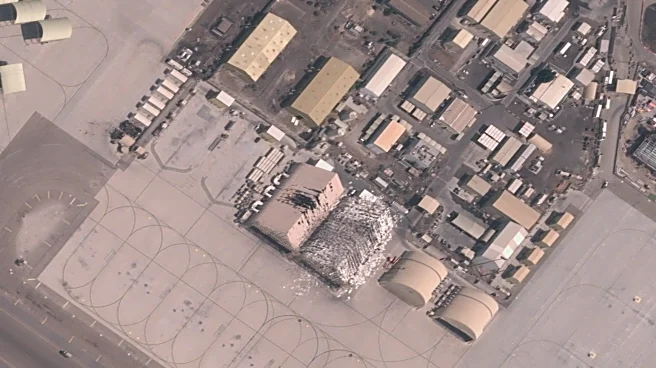
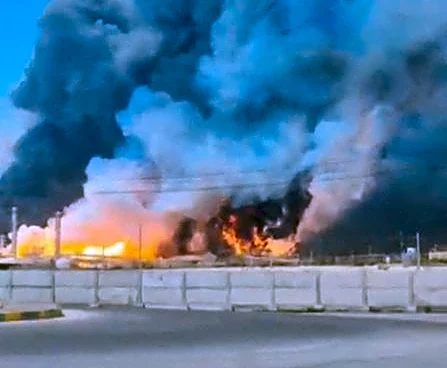
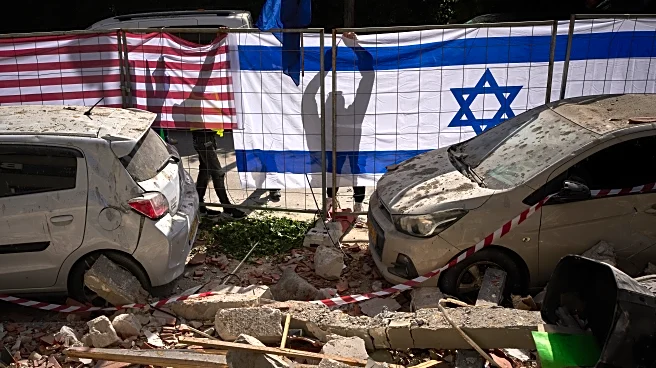
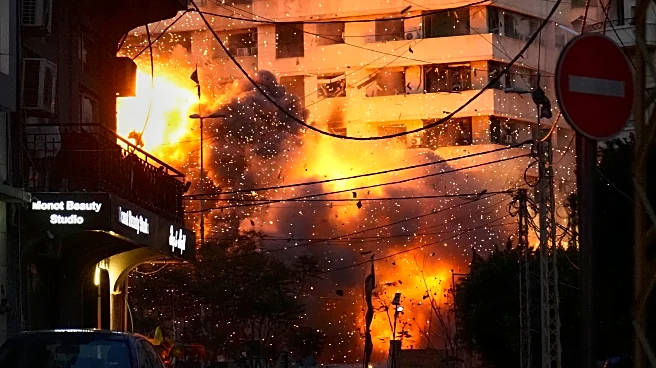
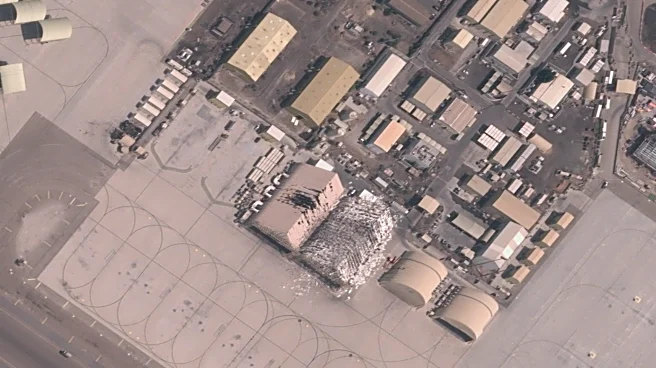
As the conflict in the Middle East continues into its fourth week, President Trump has indicated a potential reduction in U.S. military efforts in the region. The U.S. and Israel have been conducting military operations against Iran, with significant
reductions in Iranian missile and drone capabilities reported. The Trump administration has also announced a temporary lifting of sanctions on Iranian oil to address disruptions in the global oil market. The conflict has led to a near-total halt of traffic through the Strait of Hormuz, a critical waterway for global oil transport.
Why It's Important?
The ongoing conflict and the U.S. response have major implications for international oil markets and regional stability. The lifting of sanctions on Iranian oil is a strategic move to alleviate rising oil prices, which have exceeded $110 per barrel. This decision reflects the complex interplay between military strategy and economic considerations. The potential reduction in U.S. military involvement could signal a shift in policy, impacting U.S. relations with allies and adversaries in the region.
What's Next?
The U.S. may continue to evaluate its military strategy in the Middle East, balancing the need to protect strategic interests with the desire to reduce military engagement. Diplomatic efforts may be pursued to de-escalate tensions and stabilize the region. The international community will likely monitor developments closely, with potential implications for global energy markets and geopolitical alliances.