



What's Happening?
The Finnish Border Guard has released the cargo ship Fitburg, which was detained for nearly two weeks due to suspicions of damaging subsea telecommunication cables. The ship, flagged in St Vincent and the Grenadines and owned by a Turkish company with
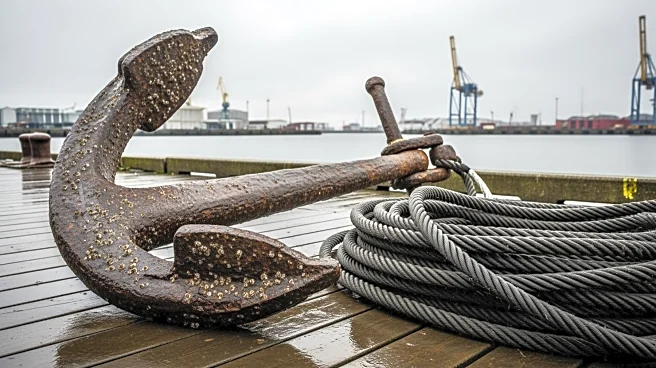
Russian ties, was escorted out to sea after authorities completed their investigation phase. The Fitburg was found with its anchor down, causing drag marks over tens of kilometers, which allegedly damaged cables owned by Finnish telecom company Elisa and a Swedish-owned cable. The ship was transporting structural steel from St. Petersburg, Russia, but was not intended to enter the EU, allowing its release. A crew member, a 48-year-old Azerbaijani boatswain, remains in custody, while three others are restricted from leaving Finland. The investigation continues to determine the crew's intent.
Why It's Important?
This incident highlights the vulnerabilities of critical infrastructure such as subsea telecommunication cables, which are essential for international communications. The damage to these cables can disrupt services and have significant economic implications. The involvement of a ship with Russian ties raises geopolitical concerns, especially given the current tensions in the region. The investigation's outcome could influence maritime regulations and security measures to protect such infrastructure. Additionally, the case underscores the complexities of jurisdiction in international waters, as seen in previous similar incidents.
What's Next?
As the investigation proceeds, Finnish authorities will likely continue to scrutinize the actions of the Fitburg's crew and the ship's operations. The detained crew member may face trial for aggravated damage, and further legal actions could be taken depending on the investigation's findings. The incident may prompt discussions among EU countries on enhancing maritime security and protecting critical infrastructure. Additionally, the case could lead to diplomatic discussions between Finland, Estonia, and other involved nations to address jurisdictional and security concerns.