







What's Happening?
The Senate Armed Services Committee is scheduled to hold a closed hearing on September 24 to examine an update on the Department of Defense's budget. Chaired by Senator Roger Wicker (R-MS) with Senator Jack Reed (D-RI) as Ranking Member, the hearing will
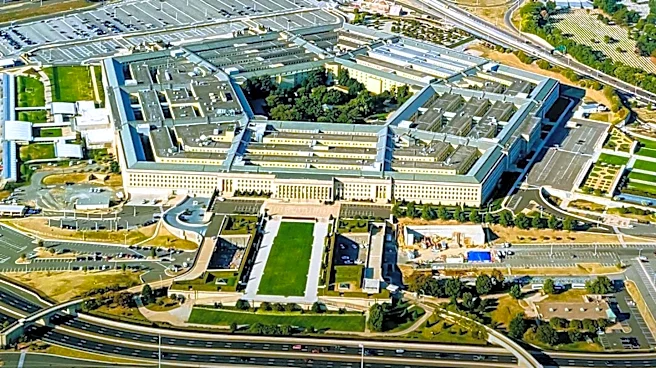
address the Pentagon's ongoing fiscal crisis. This crisis stems from structural pressures throughout the year, including a July request by the Pentagon to reallocate approximately $4.3 billion from fiscal year 2026 funds. This reallocation was intended to cover higher-than-expected personnel and operational costs globally, shifting funds away from weapons and technology programs. The Pentagon is grappling with mounting FY2026 operational costs and limited options to cover them, as Congress races to pass fiscal year 2027 funding before October 1.
Why It's Important?
This hearing is critically important as the Pentagon faces a significant fiscal crisis that could have far-reaching implications for U.S. national security and defense capabilities. The potential for a continuing resolution, which would freeze spending at fiscal year 2026 base levels through December 11, 2026, poses a substantial threat. Such a freeze would not include mandatory reconciliation funds, potentially forcing deeper cuts than any reprogramming request could resolve. Furthermore, the fiscal year 2027 budget proposal includes a one-third cut to Pentagon research, a reduction of $3.7 billion from current appropriated levels, which could undermine long-term technological superiority. The inability to adequately fund military operations and research could impact troop readiness, equipment modernization, and the development of critical defense technologies, affecting the U.S. military's ability to respond to global threats and maintain its strategic advantage.
What's Next?
As the fiscal year ends and the October 1 deadline for fiscal year 2027 funding approaches, Congress must decide on the Pentagon's budget. A continuing resolution remains a strong possibility, which would maintain current spending levels but could lead to significant shortfalls and deeper cuts in critical areas. The Senate Armed Services Committee's hearing will inform legislative decisions, but the ultimate resolution will depend on broader congressional negotiations. The Trump administration's proposed defense budget of $1.5 trillion for fiscal year 2027, an increase from the previous year, will be a key point of discussion, particularly in light of proposed research cuts. The outcome of these budgetary decisions will directly impact the Department of Defense's operational capacity, personnel, and future technological advancements, with potential consequences for U.S. defense posture globally.
Beyond the Headlines
The Pentagon's budget crisis and the congressional response highlight a deeper tension between immediate operational needs and long-term strategic investments. The reallocation of funds from weapons and technology to cover personnel costs, coupled with proposed cuts to research, suggests a prioritization of current readiness over future capabilities. This trend could have profound implications for the U.S. military's ability to innovate and maintain a technological edge against emerging adversaries. Furthermore, the ongoing debate over funding mechanisms, such as continuing resolutions, underscores systemic challenges in congressional budgeting processes, which can create instability and inefficiency for federal agencies. The long-term impact of these decisions could manifest in a less agile and technologically advanced military, potentially altering the global balance of power and increasing risks in future conflicts.