






What's Happening?
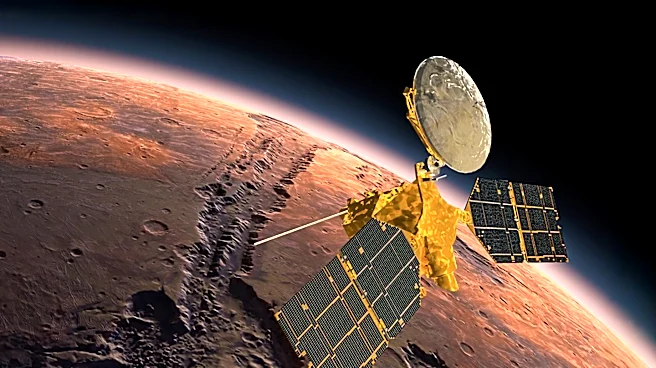
NASA has awarded Blue Origin a firm-fixed-price contract with a maximum potential value of approximately $700 million to develop the agency's Mars Telecommunications Network. This next-generation communications system is designed to provide reliable,
high-bandwidth communication and navigation services for current and future Mars missions. Under the contract, Blue Origin is tasked with designing, developing, integrating, launching, and operating the network. A key deliverable is a high-performance telecommunications orbiter for Mars, which Blue Origin must provide to NASA no later than December 31, 2028. The network, managed by NASA's Space Communications and Navigation program, is expected to be operational at Mars by 2030. This initiative is part of NASA's broader strategy to expand communication and navigation services beyond Earth and the Moon, establishing a foundation for sustained exploration of Mars in the coming decades.
Why It's Important?
This contract signifies a major step in advancing U.S. capabilities for deep space exploration, particularly for Mars missions. By establishing a dedicated, high-bandwidth telecommunications network around Mars, NASA aims to enhance the efficiency and success rate of its robotic and potentially human missions to the Red Planet. The involvement of a private aerospace company like Blue Origin in such a critical infrastructure project highlights the growing role of commercial entities in national space endeavors. This partnership could accelerate technological development in space communications and navigation, fostering innovation within the U.S. aerospace industry. Furthermore, a robust communication network is essential for future complex missions, including those that might involve human presence on Mars, ensuring reliable data transmission, imagery, and critical mission communications.
What's Next?
Blue Origin will proceed with the design and development phases of the Mars Telecommunications Network, with the goal of delivering the high-performance telecommunications orbiter by the end of 2028. Following its deployment, the network is slated to become operational at Mars by 2030. This timeline suggests a period of intensive engineering, testing, and launch preparations. The successful implementation of this network will pave the way for more ambitious Mars missions, potentially enabling more sophisticated scientific research and laying groundwork for human exploration. Future steps will likely involve integrating the new network with existing and planned Mars missions, ensuring seamless communication capabilities for a wide range of spacecraft operating on and around the planet.
Beyond the Headlines
The award of this contract to Blue Origin underscores a strategic shift in how NASA procures and manages critical space infrastructure, increasingly leveraging private sector innovation and investment. This model could lead to more cost-effective and rapid development cycles for future space projects. Beyond the immediate technical benefits, this collaboration could also stimulate job growth in the U.S. aerospace sector and foster a competitive environment among private space companies. The long-term implications include the potential for a more robust and resilient space communication architecture that supports not only government missions but also future commercial ventures in deep space, solidifying the U.S.'s leadership in space exploration.