
What's Happening?
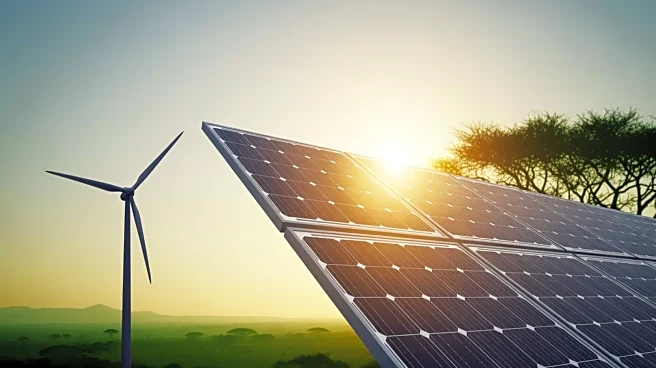
Middle Eastern sovereign wealth funds and state-backed companies are expected to continue their investments in Africa's renewable energy sector despite the ongoing conflict with Iran. Analysts suggest that these investments are driven by the long-term
economic and strategic potential of Africa's clean energy market. The Gulf region, known for its oil and gas wealth, is increasingly investing in Africa due to rising electricity demand, rapid urbanization, and the continent's growing role in global supply chains for critical minerals. A report by the Clean Air Task Force indicates that over $101.9 billion has been invested in Africa's renewable energy sector by countries such as the United Arab Emirates, Saudi Arabia, and Qatar. These investments are primarily concentrated in North, Southern, and East Africa, with West Africa receiving less funding.
Why It's Important?
The continuation of Gulf investments in Africa's renewable energy sector highlights a strategic shift towards diversifying economies away from oil and gas. This move aligns with the global transition to cleaner energy sources. For Africa, these investments are crucial as they address the significant energy access gap, with 600 million people lacking reliable power. The influx of capital from the Gulf can help expand generation capacity without burdening public finances. Additionally, these investments provide Gulf countries with strategic access to industries beyond electricity generation, such as mining and manufacturing, which are essential for the production of high-tech products.
What's Next?
As the conflict with Iran continues, the disruptions to oil and gas shipments may further incentivize Gulf countries to invest in renewable energy. This could lead to increased diversification of their investment portfolios and a stronger focus on renewable energy projects. For Africa, the challenge remains to develop the necessary transmission systems and establish a functioning electricity market to ensure that the generated power can be effectively distributed and monetized. The ongoing investments are likely to continue shaping the continent's energy landscape, with potential implications for economic growth and development.