








What's Happening?
A Polish citizen was detained by Russian border guards after crossing from Lithuania into Russia's Kaliningrad Oblast. The individual walked several hundred meters into Russian territory along the beach of the Curonian Spit. Russian authorities subsequently
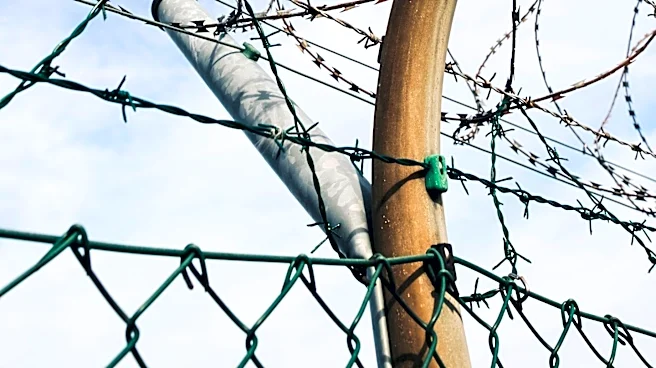
informed Lithuanian services about the detention, identifying the individual as a Polish national. According to the Lithuanian Border Guard Service, the man was walking without luggage and disregarded multiple warning signs indicating the border zone. These signs include yellow markers that designate a prohibited area several hundred meters before the actual state border markers. The Lithuanian service has initiated proceedings regarding the illegal crossing of the state border. Such incidents on the Baltic coast are uncommon, with the last recorded border crossing from Lithuania to Russia along the Baltic Sea occurring in 2018, and from Russia to Lithuania in 2017.
Why It's Important?
This incident highlights the ongoing sensitivities and strict border controls in the region, particularly concerning Russia's Kaliningrad Oblast, which is a highly militarized exclave bordering NATO and EU members Lithuania and Poland. The swift detention by Russian border guards and their subsequent notification to Lithuanian services underscore the vigilance maintained along this frontier. For U.S. foreign policy and security interests, such border transgressions, even if seemingly minor, can contribute to broader regional tensions and necessitate diplomatic engagement. The incident serves as a reminder of the geopolitical complexities in Eastern Europe and the importance of adhering to international border regulations. It also emphasizes the potential for individual actions to inadvertently trigger international communication protocols between nations with often strained relations.
What's Next?
The Lithuanian Border Guard Service is currently collecting materials to formally initiate proceedings concerning the illegal state border crossing. This will likely involve an investigation into the circumstances surrounding the Polish citizen's actions and potential legal consequences under Lithuanian law. Diplomatic channels between Lithuania and Russia, potentially involving Poland, may be engaged to facilitate the resolution of the individual's detention and repatriation. The incident could also lead to increased public awareness campaigns in border regions to prevent similar occurrences, emphasizing the clear demarcation of international boundaries. Authorities may review existing signage and warning systems to ensure their effectiveness in deterring accidental or intentional border crossings.
Beyond the Headlines
Beyond the immediate legal and diplomatic implications, this event subtly underscores the broader geopolitical landscape of the Baltic Sea region. The Curonian Spit, a UNESCO World Heritage site, is a shared natural wonder that also serves as a sensitive international border. The incident, while seemingly isolated, reflects the heightened state of alert and the strict enforcement of sovereignty in a region marked by historical tensions and ongoing geopolitical competition. It also brings to light the human element in border security, where individuals' actions, whether intentional or accidental, can become subjects of international attention and diplomatic exchanges. The rarity of such incidents, as noted by the Lithuanian Border Guard Service, suggests that while borders are clearly marked, the allure or misjudgment of individuals can still lead to unexpected international incidents.