





What's Happening?
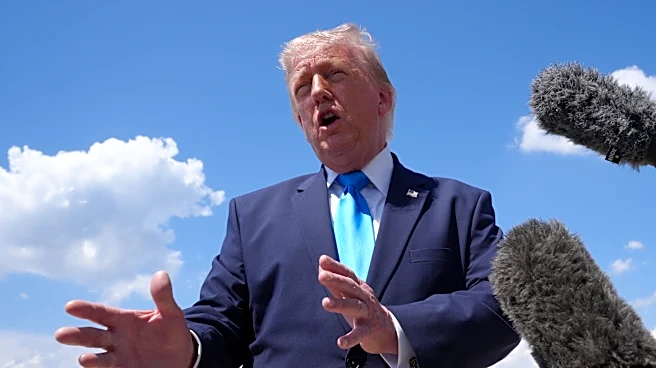
President Trump has been involved in extensive stock trading activities, with over 3,600 trades in companies that are directly influenced by his administration's policies. These trades include significant investments in companies like Nvidia, Lockheed
Martin, General Dynamics, and Northrop Grumman. The Trump Organization claims that these investments are managed through fully discretionary accounts by third-party financial institutions, with no input from Trump or his family. Despite this, Trump's financial disclosure documents indicate that he is aware of the specific stocks he owns, which has raised questions about potential conflicts of interest. Critics argue that the lack of transparency and the potential for self-dealing could undermine public trust.
Why It's Important?
The issue of President Trump's stock trading is significant as it highlights potential ethical concerns regarding conflicts of interest. As the President, Trump is in a position to influence policies that could affect the stock market, raising questions about whether his personal financial interests could impact his decision-making. This situation underscores the broader debate over whether government officials should be allowed to trade stocks, especially those with insider knowledge. The controversy also reflects on the integrity of the U.S. financial system, as public confidence could be eroded if there is a perception of unfair advantage or self-dealing by high-ranking officials.
What's Next?
The ongoing scrutiny of President Trump's stock trading activities may lead to increased calls for legislative action to address potential conflicts of interest among government officials. There is a growing bipartisan movement in Congress to ban stock trading by lawmakers, which could gain momentum in light of these revelations. Additionally, the Trump administration may face pressure to provide more transparency regarding the management of the President's investments. The outcome of this situation could influence future policies on financial disclosures and ethical standards for public officials.
Beyond the Headlines
The ethical implications of President Trump's stock trading activities extend beyond immediate political concerns. The situation raises questions about the adequacy of current laws governing financial disclosures and conflicts of interest for high-ranking officials. It also highlights the challenges of balancing personal financial interests with public responsibilities. The controversy could lead to a reevaluation of how financial transparency is enforced in the U.S. government, potentially resulting in stricter regulations and oversight to prevent similar issues in the future.