

What's Happening?
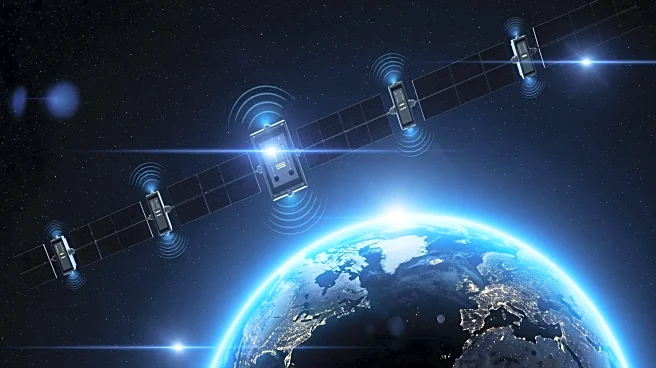
A potential collision in space was narrowly avoided last week when a newly deployed Chinese satellite came within a few hundred meters of one of the approximately 9,000 Starlink satellites currently operating in low Earth orbit. SpaceX, the operator of Starlink,
attributed the close call to the Chinese satellite operator's failure to share location data. Michael Nicolls, Vice President of Starlink Engineering, highlighted the importance of sharing ephemeris data to prevent such dangerous close approaches. The incident involved a satellite launched by CAS Space from the Jiuquan Satellite Launch Center in China. CAS Space responded by stating that their launches are planned using a ground-based space awareness system to avoid known satellites and debris. However, they noted that the incident occurred nearly 48 hours after payload separation, suggesting the launch mission had concluded by then.
Why It's Important?
The near-miss incident underscores the growing concerns over space traffic management as the number of satellites in low Earth orbit continues to increase. With over 24,000 objects currently being tracked and projections suggesting up to 70,000 satellites by the end of the decade, the risk of collisions is rising. Such incidents could lead to a Kessler syndrome scenario, where a cascade of collisions renders low Earth orbit unusable. This situation highlights the need for improved coordination and communication between satellite operators to ensure the safety and sustainability of space operations. The incident also raises questions about the protocols and systems in place for space traffic management, particularly as more private and government entities launch satellites.
What's Next?
In response to the incident, there may be increased calls for international cooperation and the establishment of standardized protocols for space traffic management. Stakeholders, including governments and private companies, might push for more robust systems to track and share satellite location data. Additionally, regulatory bodies could consider implementing stricter guidelines for satellite launches and operations to prevent future close calls. The growing number of satellites also suggests a need for technological advancements in collision avoidance systems and space debris mitigation strategies.
Beyond the Headlines
The incident highlights the ethical and legal challenges of space exploration and utilization. As space becomes more crowded, questions about liability and responsibility in the event of a collision become more pressing. The situation also reflects broader geopolitical dynamics, as countries and companies vie for dominance in space technology and infrastructure. The need for a collaborative approach to space governance is becoming increasingly apparent, as the actions of one entity can have significant implications for others operating in the same environment.