






What's Happening?
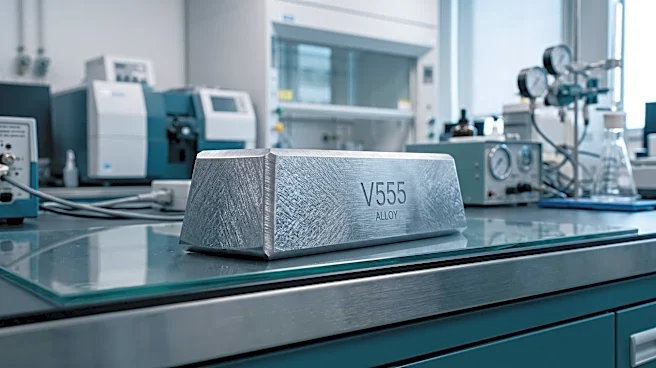
Researchers at the Department of Energy’s (DOE) Pacific Northwest National Laboratory (PNNL) have developed a novel metal alloy, named V555, designed for nuclear fission reactors. This new alloy reportedly withstands stresses of up to 600 megapascals
(MPa) at room temperature. The team utilized a computational approach called robust alloy design (RAD) to screen nearly 1,000 potential metal combinations, identifying 724 promising compositions before selecting V555 for laboratory testing. The RAD process evaluates materials against various requirements, including radiation resistance and manufacturability, to identify those capable of enduring the extreme temperatures, radiation, and mechanical stress within nuclear reactors. Initial room-temperature tests of V555 showed an estimated yield strength of 500 to 600 MPa, indicating its significant strength before permanent deformation. The research was supported by the DOE’s Office of Nuclear Energy through its Innovative Nuclear Materials program.
Why It's Important?
The development of V555 is crucial for enhancing the safety, efficiency, and longevity of nuclear reactors in the U.S. Traditional cladding materials like steels and zirconium-based alloys have limitations under extreme reactor conditions. A stronger, more resilient alloy can lead to more durable reactor components, potentially extending the operational lifespan of nuclear power plants and reducing maintenance requirements. This innovation could also enable the design of advanced reactors that operate at higher temperatures and pressures, leading to increased energy output and efficiency. Furthermore, the computational RAD approach used by PNNL represents a significant advancement in materials science, offering a systematic and accelerated method for discovering new materials with specific properties. This could reduce the time and cost associated with developing next-generation nuclear materials, fostering innovation in the nuclear energy sector.
What's Next?
While initial room-temperature tests have shown promising strength for V555, further extensive testing is required to confirm its suitability for use in nuclear reactors. Researchers will now examine how V555 performs under the extreme conditions present in reactors, including high heat, radiation exposure, and prolonged mechanical stress. This will involve specialized tests to assess its radiation resistance, corrosion resistance, and long-term stability. The team also plans to test additional promising compositions identified through the RAD process to explore a broader range of materials for future nuclear systems. The ultimate goal is to validate V555 and other potential alloys for commercial application in advanced nuclear reactor designs, which could take several years of rigorous testing and regulatory approval processes.
Beyond the Headlines
The creation of V555 and the robust alloy design (RAD) methodology signify a paradigm shift in materials engineering for critical applications. By moving beyond incremental modifications of existing alloys, researchers are now able to design materials from scratch with specific performance criteria in mind. This approach has implications far beyond nuclear reactors, potentially revolutionizing material development in aerospace, defense, and other high-stress environments. Ethically, the development of safer and more durable nuclear materials contributes to the responsible expansion of nuclear energy, addressing concerns about waste and operational safety. Legally, the successful deployment of such materials would require new regulatory frameworks and certification processes to ensure their long-term reliability. Culturally, this advancement reinforces the U.S.'s leadership in scientific innovation and its commitment to developing sustainable and secure energy solutions for the future.