
What's Happening?
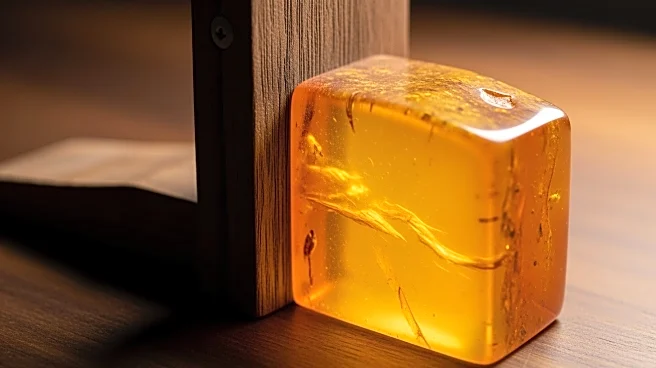
A woman in Romania discovered a 3.5-kilogram stone in a stream bed, which she used as a doorstop for decades. This stone was later identified as one of the largest intact chunks of amber in the world,
valued at approximately $1.1 million. The amber, known as rumanite, is famous for its deep reddish hues and was found in the village of Colti, a region known for amber deposits. After the woman's death in 1991, her relative sold the amber to the Romanian state, which had it appraised by experts at the Museum of History in Krakow, Poland. The amber is estimated to be between 38 to 70 million years old and is now classified as a national treasure of Romania.
Why It's Important?
The discovery of this amber highlights the potential for valuable natural resources to be found in unexpected places. Amber, a fossilized tree resin, is not only a gemstone but also a significant scientific resource, preserving ancient biological material. This find underscores the importance of geological and paleontological studies in understanding Earth's history and the potential economic value of natural resources. The amber's classification as a national treasure also emphasizes the cultural and historical significance of such discoveries, which can enhance national heritage and scientific research.