

What's Happening?
Admiral Sam Paparo, the commander of the U.S. Indo-Pacific Command, has identified three 'meta trends' that are reshaping modern warfare: information operations, cognitive operations, and cyber operations. Speaking at the Honolulu Defense Forum, Paparo emphasized
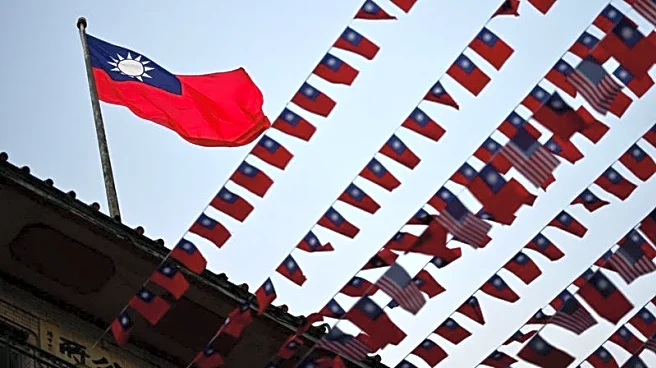
the importance of integrating these operations into every aspect of military planning and execution. He highlighted the ability of entities to exploit the information environment to influence perceptions and disrupt decision-making without direct conflict. The forum also featured Palauan President Surangel Whipps, who discussed Chinese efforts to undermine Palau's relationship with the United States and its recognition of Taiwan. Whipps noted that China is using narratives to suggest that U.S. militarization puts Palau at risk, while also warning that Palau could be isolated if it does not align with China.
Why It's Important?
The emphasis on information, cognitive, and cyber operations reflects a shift in military strategy towards non-traditional forms of warfare. These operations can significantly impact geopolitical dynamics by shaping narratives and influencing public opinion without direct military engagement. The U.S. military's focus on these trends underscores the need for a comprehensive approach to national security that includes not only military might but also strategic communication and information management. The situation in Palau highlights the broader geopolitical struggle between the U.S. and China for influence in the Indo-Pacific region. China's efforts to sway Palau's allegiance demonstrate the importance of information operations in modern diplomacy and international relations.
What's Next?
The U.S. military is likely to continue integrating information, cognitive, and cyber operations into its strategic planning. This approach may lead to increased investment in technology and personnel specializing in these areas. The U.S. government may also develop a more coordinated strategy to counter foreign influence operations and strengthen alliances in the Indo-Pacific region. Palau's relationship with the U.S. and its stance on Taiwan will remain a focal point in the region, with potential implications for other Pacific nations facing similar pressures from China.
Beyond the Headlines
The focus on non-traditional warfare highlights the evolving nature of global conflicts, where information and perception can be as powerful as military force. This shift requires a reevaluation of traditional military strategies and the development of new capabilities to address emerging threats. The situation in Palau illustrates the complex interplay between military, diplomatic, and informational elements in international relations. As countries navigate these challenges, the role of information operations in shaping global narratives and influencing policy decisions will become increasingly significant.