



What's Happening?
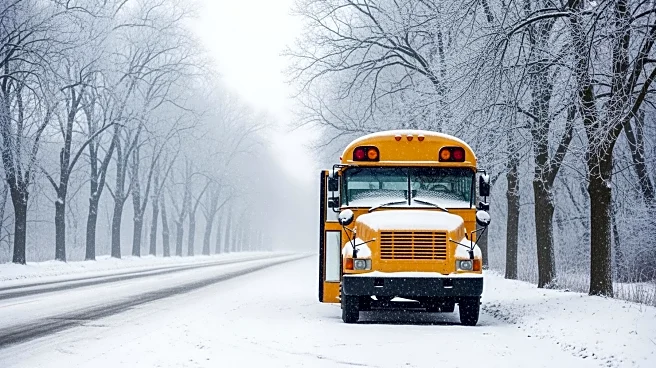
A severe snowstorm over the weekend has led to significant disruptions across Minnesota, with more than a foot of snow blanketing parts of the state. St. Paul Public Schools announced the cancellation of classes on Monday, with no e-learning day scheduled.
Similarly, Minneapolis Public Schools declared a severe weather day, affecting students from pre-K through fifth grade, while middle and high school students will have an e-learning day. The storm has prompted a no travel advisory in southern Minnesota, and Governor Tim Walz has authorized the Minnesota National Guard to assist with emergency operations. Additionally, hundreds of flights have been canceled at Minneapolis-St. Paul International Airport, and snow emergencies are in effect in several cities, including Minneapolis and St. Paul.
Why It's Important?
The snowstorm's impact on Minnesota highlights the challenges of severe weather events on public infrastructure and daily life. School closures affect thousands of students and families, disrupting education and childcare arrangements. The travel advisories and flight cancellations at a major airport like Minneapolis-St. Paul International have broader implications for regional and national travel, affecting business operations and personal plans. The involvement of the National Guard underscores the severity of the situation and the need for coordinated emergency response efforts. Such weather events also strain local resources and highlight the importance of preparedness and resilience in the face of natural disasters.
What's Next?
As the storm subsides, efforts will likely focus on clearing roads and restoring normalcy to affected areas. Schools will need to assess conditions before resuming classes, and airlines will work to accommodate passengers affected by cancellations. The state may review its emergency response strategies to improve future preparedness. Residents and businesses will continue to deal with the aftermath, including potential property damage and economic impacts. The situation may prompt discussions on infrastructure improvements and climate resilience to better handle similar events in the future.