






What's Happening?
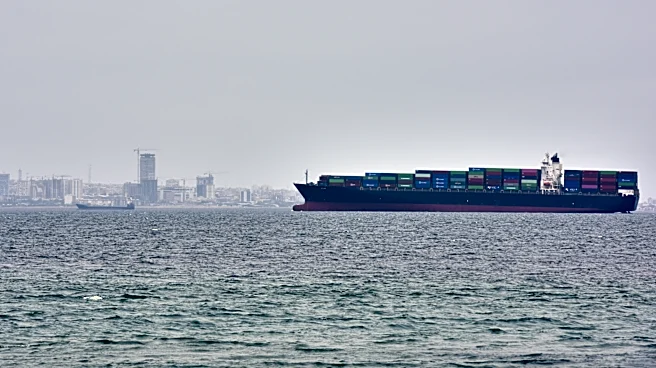
Liberia, with the support of Argentina and Panama, is set to present a revised emissions proposal to the International Maritime Organization's (IMO) Marine Environmental Protection Committee. This proposal comes after a previous framework failed to gain
consensus last year, largely due to opposition led by the United States. The new proposal removes the controversial IMO fund, which was intended to collect fines from non-compliant ships, a measure seen as punitive by some member states. Instead, the focus has shifted towards incentives for adopting cleaner fuels and technologies, such as onboard carbon capture and wind-assisted propulsion. The proposal aims to align emission reduction targets with the availability of new fuels and technologies, setting targets on a five-year cycle to allow shipowners to plan fleet changes cost-effectively.
Why It's Important?
The revised proposal is significant as it attempts to address the concerns of smaller shipowners and nations that viewed the previous framework as unfairly punitive. By focusing on incentives rather than penalties, the proposal seeks to foster broader international cooperation and adoption of cleaner maritime practices. The outcome of this proposal could influence global shipping regulations and impact the maritime industry's approach to reducing emissions. The U.S. stance, represented by Marco Sylvester, remains a critical factor, as its opposition could hinder consensus. However, the backing of previous opponents like Saudi Arabia suggests a shift towards a more pragmatic approach, potentially paving the way for broader acceptance.
What's Next?
The upcoming session of the IMO's Marine Environmental Protection Committee will be crucial in determining the fate of the Liberian proposal. Delegates are keenly observing the U.S. response, as its support or continued opposition will significantly influence the negotiations. The session will also address other maritime issues, such as the situation in the Strait of Hormuz, where Iran's proposed controls and tolls challenge the existing Traffic Separation Scheme. The outcome of these discussions could have far-reaching implications for international maritime law and the global shipping industry.