



What's Happening?
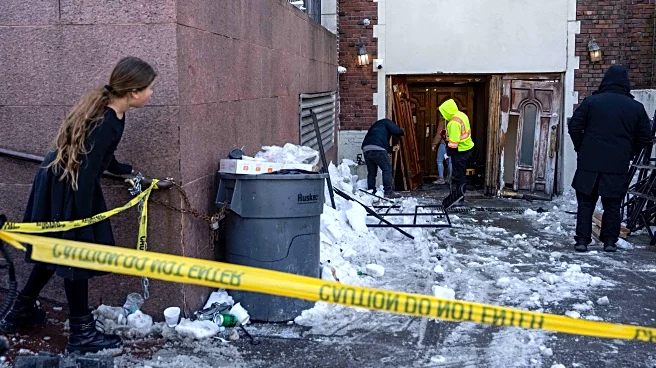
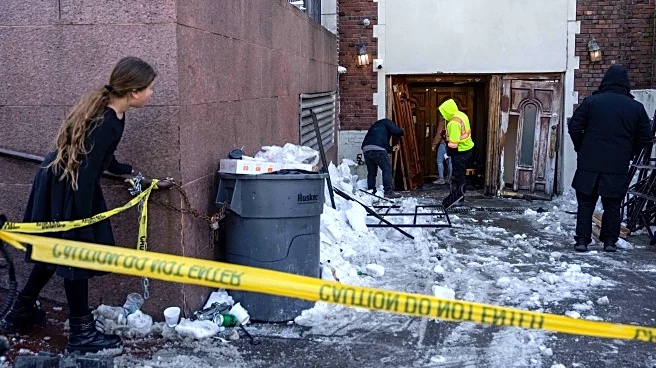
A man named Dan Sohail, aged 36, has pleaded not guilty to federal charges of intentionally damaging religious property after driving his car into the Chabad Lubavitch world headquarters in New York City. The incident occurred on January 28, causing damage
to the entrance of the Jewish site but no injuries. Sohail, who is in the process of converting to Judaism, appeared in federal court wearing a yarmulke. His attorney, Mia Eisner-Grynberg, stated that Sohail denied the intentionality of his actions as described by the government. Federal prosecutors allege that Sohail directed congregants to move before hitting the building five times with his car. Sohail claimed he lost control of the vehicle due to his heavy boots. His family and Chabad rabbis have indicated that Sohail did not harbor any animosity towards Jews. The incident coincided with the 75th anniversary of Rabbi Menachem Mendel Schneerson's leadership of the Lubavitch movement.
Why It's Important?
This case highlights the ongoing concerns about security and safety at religious sites, particularly those with historical significance. The Chabad Lubavitch headquarters has been a focal point for Jewish life and has a history of being targeted, as seen during the Crown Heights riots in 1991. The federal charges against Sohail underscore the seriousness with which the U.S. legal system treats acts of vandalism against religious properties. The incident also raises questions about mental health and its role in criminal behavior, as Sohail's family has mentioned his mental health issues. The outcome of this case could influence how similar cases are prosecuted in the future, particularly those involving individuals with mental health challenges.
What's Next?
The legal proceedings will continue as Sohail faces the possibility of a maximum penalty of three years in prison if the damage is found to exceed $5,000. The Chabad community and law enforcement will likely remain vigilant in ensuring the security of the headquarters. The case may prompt discussions on how to better protect religious sites and address mental health issues in the context of criminal justice. The broader Jewish community will be watching the case closely, as it may set a precedent for how similar incidents are handled in the future.