






What's Happening?
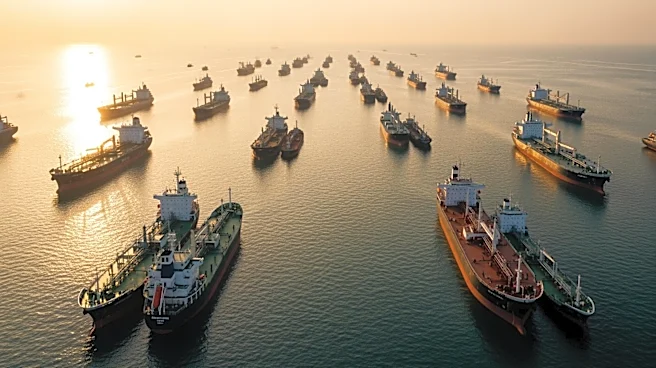
A US-Iran ceasefire agreement aims to temporarily reopen the Strait of Hormuz, where over 800 vessels have been trapped due to heightened tensions. The truce, announced just before a deadline set by President Trump, promises two weeks of safe passage,
though details remain unclear. Shipowners are cautiously optimistic, consulting insurers and security advisors as they prepare vessels for potential transit. The situation remains fluid, with ship movements being closely monitored to assess the truce's effectiveness.
Why It's Important?
The reopening of the Strait of Hormuz is critical for global energy supply, as it is a major transit route for oil and gas. The blockade has caused significant disruptions, affecting energy prices and supply chains worldwide. The truce offers a temporary reprieve, but the uncertainty surrounding its implementation poses risks for shipowners and insurers. The situation underscores the geopolitical volatility in the region and its impact on global trade, highlighting the need for diplomatic solutions to ensure stability.
What's Next?
Stakeholders will closely monitor the truce's implementation, with particular attention to the movement of LNG ships, which have been unable to transit the strait since the conflict began. The response from Iran and the US will be crucial in determining the truce's success. Shipowners and insurers will continue to assess risks, and any breach of the agreement could lead to renewed tensions. The situation remains precarious, with potential implications for future maritime security policies.