








What's Happening?
The European Union (EU) has funded the delivery of 5,500 boxes of ready-to-use therapeutic food (RUTFs) to northern Yemen, which will be distributed by Action Contre la Faim (ACF). These supplies arrived through Hodeida’s port, aiming to provide critical
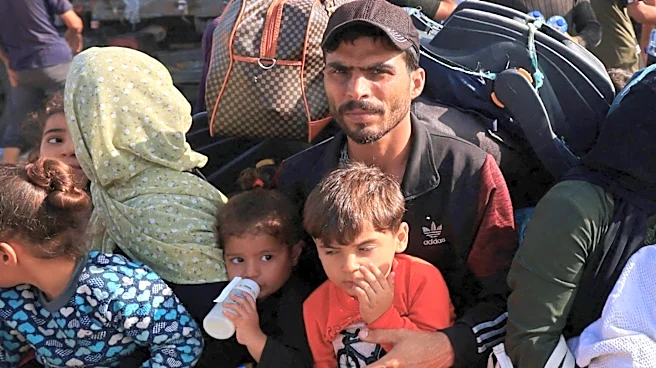
nutrition treatment for children suffering from acute malnutrition. This initiative is crucial as malnutrition levels in Yemen remain alarmingly high, with an estimated 2.2 million children and 1.3 million pregnant and breastfeeding women acutely malnourished. The delivery addresses significant supply shortages, as many health facilities in northern Yemen have faced stock-outs of RUTFs. The EU's support is part of a broader effort to strengthen the nutrition pipeline in the region, which has been severely impacted by ongoing import constraints, increased transportation costs, disruptions to shipping routes, and prolonged delivery timelines due to a worsened operational environment and escalation in the Middle East. ACF is also awaiting an additional 14,300 boxes of RUTFs that are delayed in transit.
Why It's Important?
This humanitarian aid is vital for addressing the severe malnutrition crisis in northern Yemen, where regional escalations and operational challenges have exacerbated food insecurity and hindered the delivery of essential supplies. The EU's funding and ACF's distribution efforts directly impact the survival and health of thousands of vulnerable children, providing immediate relief in a region grappling with a protracted humanitarian crisis. The initiative highlights the critical role of international cooperation in mitigating the effects of conflict and instability on civilian populations. Furthermore, it underscores the fragility of humanitarian supply chains in conflict zones and the urgent need for sustained diplomatic efforts to ensure unimpeded access for life-saving assistance. The success of this pilot initiative in facilitating RUTF importation could also serve as a model for overcoming similar logistical hurdles in other crisis-affected areas globally, demonstrating effective strategies for humanitarian response.
What's Next?
Action Contre la Faim will proceed with the distribution of the 5,500 boxes of RUTFs across its supported health facilities in northern Yemen. These supplies are expected to ensure uninterrupted treatment for approximately two months and may also cover supply gaps in other health facilities in coordination with relevant partners. The organization is actively monitoring the status of an additional 14,300 boxes of RUTFs that are currently delayed in transit, with their arrival being crucial for sustained relief efforts. Humanitarian organizations, including ACF, will continue to advocate for sustained diplomatic efforts to de-escalate regional tensions and ensure that humanitarian aid can reach those in need without further disruptions. The ongoing challenges in the operational environment suggest that continuous monitoring and adaptive strategies will be necessary to maintain the flow of essential supplies.
Beyond the Headlines
The challenges faced in delivering humanitarian aid to northern Yemen, such as import constraints and shipping disruptions, reveal deeper systemic issues related to global supply chain vulnerabilities and the complex interplay of geopolitical conflicts with humanitarian efforts. The reliance on international donors like the EU underscores the significant funding gaps and logistical hurdles that often characterize large-scale humanitarian crises. This situation also brings to light the ethical imperative for international actors to prioritize civilian protection and access to essential services, even amidst political and military conflicts. The long-term implications of widespread malnutrition, particularly among children, include lasting health problems, developmental delays, and a perpetuation of the cycle of poverty, emphasizing the need for not just immediate aid but also sustainable solutions for food security and healthcare infrastructure in conflict-affected regions.