


What's Happening?
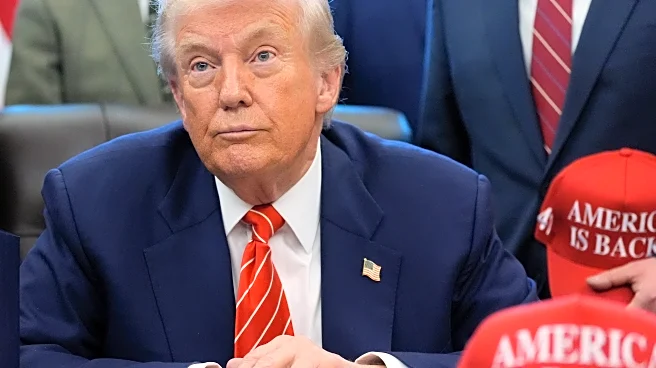
The federal government has reopened following a brief partial shutdown, as President Trump signed a funding package into law on February 3, 2026. This package includes five spending bills that, along with previously enacted funding, will finance most
federal operations through September 30, 2026. Key agencies such as the U.S. Department of Labor, the National Labor Relations Board, and the U.S. Equal Employment Opportunity Commission are covered under this funding. However, the U.S. Department of Homeland Security (DHS) remains partially funded, with its current funding set to expire on February 13, 2026. Democratic lawmakers are advocating for changes related to Customs and Border Protection and Immigration and Customs Enforcement, complicating efforts to secure full-year funding for DHS.
Why It's Important?
The reopening of the federal government ensures the continuation of essential services and operations, which is crucial for maintaining public trust and economic stability. However, the uncertainty surrounding DHS funding highlights ongoing political challenges and debates over immigration and border security policies. The potential shutdown of DHS could impact national security operations and immigration enforcement, affecting both government employees and the broader public. The situation underscores the complexities of budget negotiations and the influence of political priorities on federal funding decisions.
What's Next?
With the DHS funding deadline approaching, lawmakers face pressure to negotiate a long-term funding solution. If a deal is not reached by February 13, 2026, DHS may face a shutdown, which could disrupt its operations. The ongoing discussions are likely to involve debates over immigration policies and border security measures, with potential implications for future legislative priorities and political dynamics. Stakeholders, including government officials and advocacy groups, will be closely monitoring the situation as the deadline nears.