

What's Happening?
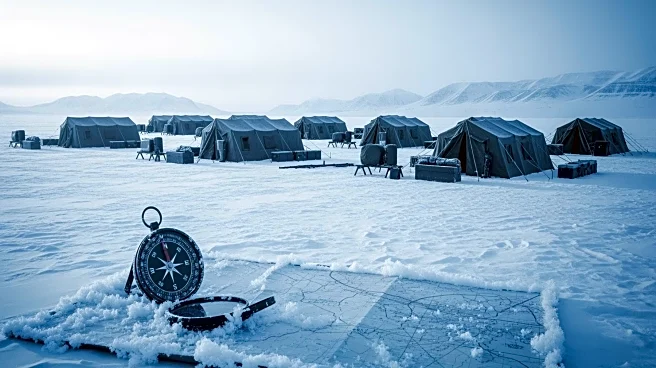
Troops from several European countries, including France, Germany, the U.K., Norway, and Sweden, have arrived in Greenland to support Denmark as talks with the U.S. highlight a fundamental disagreement over the island's future. The discussions, involving
Danish and Greenlandic officials with U.S. representatives, revealed President Trump's interest in acquiring Greenland for strategic military and economic reasons. However, Greenlandic and Danish officials, including Greenland's Prime Minister Jens-Frederik Nielsen, have firmly opposed any U.S. annexation, stating that 'Greenland is not for sale.' The European troop presence is intended to demonstrate unity among European nations and to signal to the U.S. that NATO can safeguard the Arctic region's security amid rising Russian and Chinese interest.
Why It's Important?
The arrival of European troops in Greenland underscores the geopolitical significance of the Arctic region, particularly in the context of U.S. interests in expanding its influence. The disagreement between the U.S. and Denmark over Greenland's future highlights the strategic importance of the island, which is rich in untapped mineral resources. The situation also reflects broader international tensions, as the Arctic becomes a focal point for global powers like Russia and China. The involvement of NATO allies in Greenland suggests a collective European stance against unilateral U.S. actions, emphasizing the importance of multilateral cooperation in addressing security concerns in the Arctic.
What's Next?
A working group has been established to continue discussions between the U.S. and Denmark, focusing on addressing American security concerns while respecting Denmark's sovereignty over Greenland. The ongoing dialogue aims to find a diplomatic resolution to the disagreement, with both sides committed to high-level talks in the coming weeks. The presence of European troops in Greenland is expected to continue on a rotational basis, reinforcing the region's security. The situation remains fluid, with potential implications for NATO's role in the Arctic and the future of U.S.-European relations.