
What's Happening?
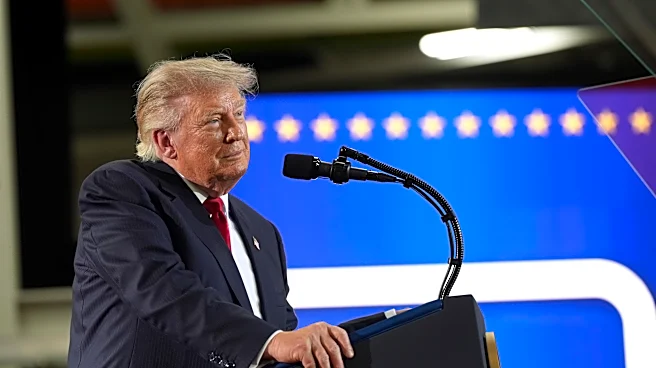
President Donald Trump has called for the elimination of the Senate filibuster, a move that aligns with previous efforts by progressive Democrats. Trump suggested that Senate Republicans should terminate
the filibuster to expedite the passage of legislation, including the Safeguard American Voter Eligibility (SAVE) Act. The filibuster, a Senate procedure requiring 60 votes to end debate on legislation, has been a point of contention, with critics arguing it enables minority rule and promotes legislative gridlock. Proponents, however, believe it encourages bipartisan consensus. The call to end the filibuster has been echoed by 35 House Democrats who signed a resolution urging its removal to advance civil rights and voting protections. Despite these calls, the filibuster has withstood previous attempts at elimination, with some Senate institutionalists opposing its removal.
Why It's Important?
The potential elimination of the filibuster could significantly alter the legislative process in Washington, D.C., granting the majority party greater power to pass legislation without minority support. This change could lead to more rapid policy shifts and reduce the need for bipartisan cooperation. For Republicans, ending the filibuster could facilitate the passage of conservative legislation, while Democrats see its removal as a way to advance progressive policies. However, the removal of the filibuster could also lead to increased instability in national policies, as future majorities could easily overturn previous legislation. The debate over the filibuster reflects broader tensions between the desire for legislative efficiency and the need for minority party protections.
What's Next?
The future of the filibuster remains uncertain, as it requires significant political will and consensus to change Senate rules. While President Trump and some Democrats advocate for its removal, there is still considerable opposition within the Senate. The outcome of this debate could hinge on upcoming elections and shifts in Senate composition. If Democrats gain seats, the path to ending the filibuster could become narrower. Meanwhile, discussions around potential reforms, such as implementing a code of ethics and term limits for the Supreme Court, continue to be part of the broader conversation on institutional changes in the U.S. government.