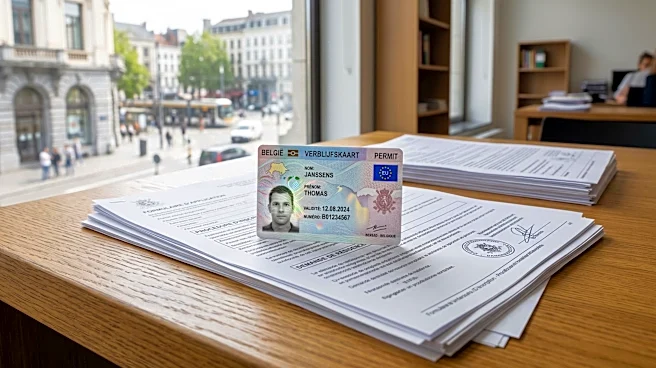










What's Happening?
U.S. citizens planning to move to Belgium will find that the country does not offer a specific digital nomad visa, meaning remote work alone does not qualify individuals for residency. To live in Belgium long-term, Americans must secure a national long-stay
D visa based on a valid reason such as employment, self-employment, study, or family reunification. While a professional card is available for freelancers, consultants, and business owners, it is not explicitly a remote work visa. The process involves applying for the D visa from the U.S. before travel and then registering locally upon arrival to obtain a Belgian residence card. Each residency route has distinct requirements, including specific documentation, financial proofs, and in some cases, a job offer from a Belgian employer.
Why It's Important?
The absence of a digital nomad visa in Belgium is a critical factor for U.S. remote workers considering relocation, as it necessitates adherence to more traditional and often more stringent immigration pathways. This contrasts with other European countries that have embraced digital nomad schemes. For U.S. citizens, this means a more complex and potentially longer application process, requiring them to fit into established categories like skilled worker, student, or family member. This situation impacts the flexibility and ease of movement for the growing U.S. remote workforce, potentially deterring some from choosing Belgium as a destination. It also highlights Belgium's more conservative approach to immigration in the context of evolving global work trends, which could influence its attractiveness for international talent compared to nations with more flexible visa options.
What's Next?
U.S. citizens intending to move to Belgium must first identify the appropriate residency route, such as a single permit for those with a job offer, an EU Blue Card for highly qualified professionals, a professional card for self-employed individuals, a student visa, or family reunification. The next steps involve gathering and authenticating all required documents, which may include a U.S. passport, a completed long-stay visa application, a criminal history record with an apostille, a medical certificate, and proof of health insurance. The application process varies depending on the chosen route, with some requiring the Belgian employer to initiate the work authorization. After visa approval, individuals must arrange housing, healthcare, and complete an arrival and registration process with local authorities within eight days of arrival.
Beyond the Headlines
Belgium's stance on remote work visas reflects a broader European debate on how to manage the influx of international talent while protecting local labor markets and ensuring social security contributions. While some countries actively court digital nomads, Belgium's approach prioritizes traditional employment and established residency categories. This could be rooted in concerns about maintaining social welfare systems, ensuring tax compliance, or managing housing markets. For U.S. citizens, this means a more structured and less spontaneous relocation experience. The long-term implications could include Belgium potentially missing out on the economic benefits brought by a diverse remote workforce, or conversely, maintaining a more stable and integrated immigrant population. This situation also underscores the varying philosophies among nations regarding the future of work and global mobility.