
What's Happening?
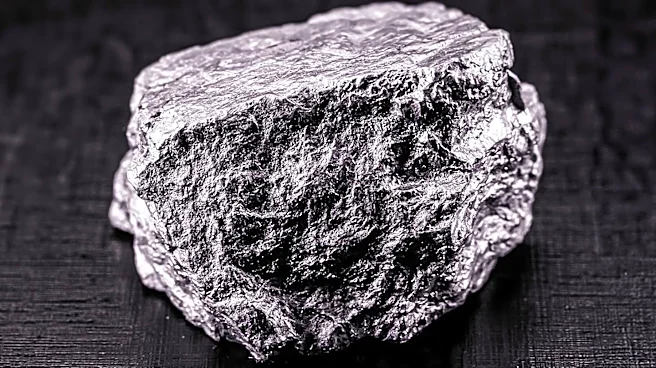
Antarctica has become a significant site for meteorite collection, with over 45,000 specimens recovered since 1912. The continent's unique ice dynamics, involving slow-moving glaciers and katabatic winds,
create conditions that concentrate meteorites in specific areas. These meteorites, often originating from asteroids, are preserved and exposed by the ice, making them accessible for scientific study. The process involves meteorites being buried by snow, which compresses into ice and moves towards the coast. In certain areas, the ice is diverted upwards, exposing the meteorites as the surface ice sublimates.
Why It's Important?
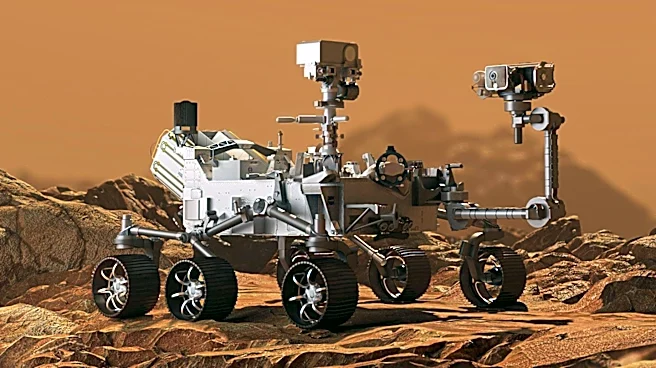
The collection of meteorites from Antarctica provides invaluable insights into the solar system's history and the composition of celestial bodies. These meteorites include rare samples from the Moon and Mars, offering a cost-effective alternative to space missions for obtaining extraterrestrial material. The systematic recovery and study of these meteorites enhance our understanding of planetary formation and the potential for life beyond Earth. The research conducted on these specimens contributes to advancements in fields such as geology, astronomy, and planetary science.
What's Next?
Ongoing research and exploration efforts in Antarctica aim to uncover more meteorites, with estimates suggesting that hundreds of thousands may still be hidden beneath the ice. Scientists are using advanced mapping techniques to identify promising search areas, considering factors like ice velocity and surface temperature. As climate conditions change, the dynamics of ice flow and meteorite exposure may also shift, potentially impacting future collection efforts. Continued international collaboration and funding are essential to support these scientific endeavors and preserve the unique natural laboratory that Antarctica provides.