









What's Happening?
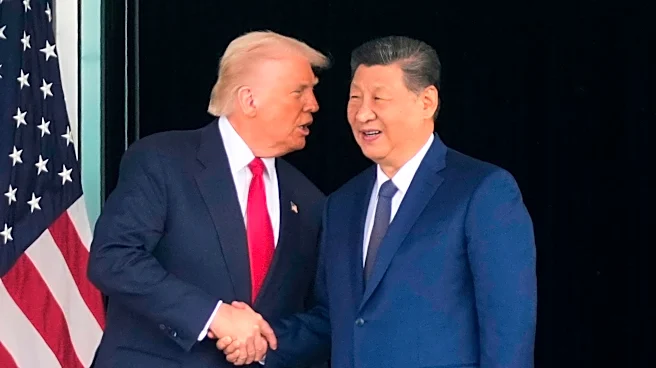
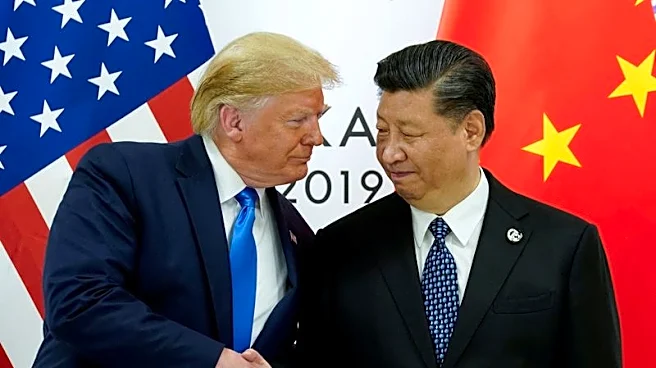
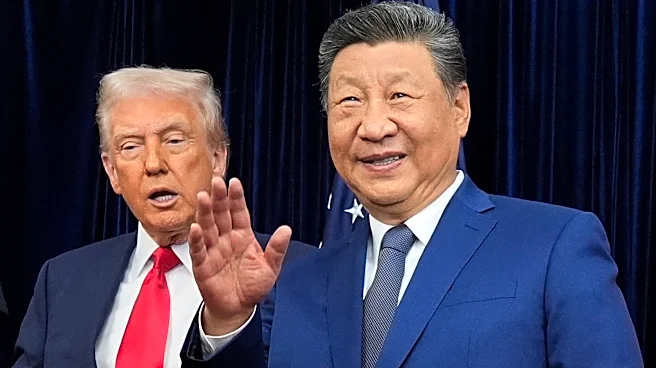
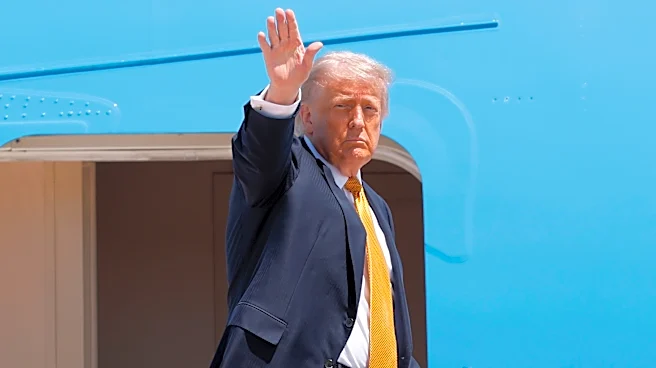
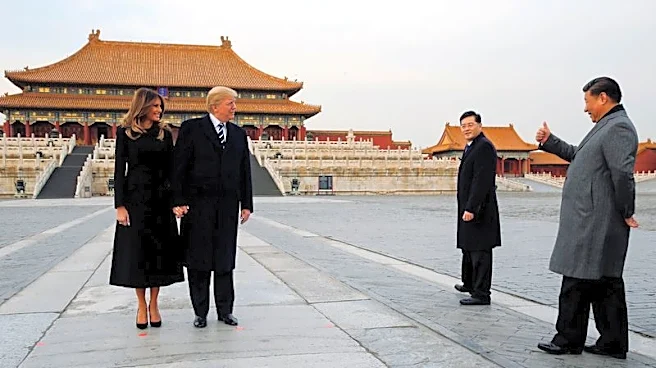
President Trump is traveling to Beijing for a summit with Chinese President Xi Jinping, marking his first visit to China in nine years. The two-day meeting will focus on several critical issues, including trade, artificial intelligence, and nuclear weapons.
President Trump is accompanied by a delegation of CEOs to advocate for increased Chinese investment in the United States. The summit aims to address ongoing trade tensions, with Beijing expected to announce purchases of U.S. airplanes, agricultural products, and energy. Additionally, discussions will cover the role of advanced AI models in cyber-espionage, with both sides seeking to establish communication channels to manage these concerns. The summit also provides a platform for President Trump to discuss the U.S.'s support for Taiwan, a contentious issue for China, which views Taiwan as part of its territory.
Why It's Important?
The summit is significant as it addresses key economic and geopolitical issues between the U.S. and China, two of the world's largest economies. The potential agreements on trade could benefit American industries, particularly agriculture and aerospace, which have been affected by previous tariffs. The discussions on artificial intelligence are crucial as both nations are leaders in technology development, and establishing communication channels could help mitigate risks associated with cyber-espionage. The summit also holds importance for Taiwan, as any shift in U.S. policy could impact regional stability. Furthermore, the meeting could influence global economic policies and set the tone for future U.S.-China relations.
What's Next?
Following the summit, potential outcomes include formal trade agreements that could ease tariffs and boost U.S. exports to China. The establishment of communication channels on AI could lead to further collaboration or regulatory frameworks between the two nations. The discussions on Taiwan and nuclear weapons may not result in immediate policy changes, but they could influence future diplomatic strategies. Stakeholders, including U.S. businesses and international allies, will closely monitor the outcomes to assess their impact on global trade and security dynamics.