







What's Happening?
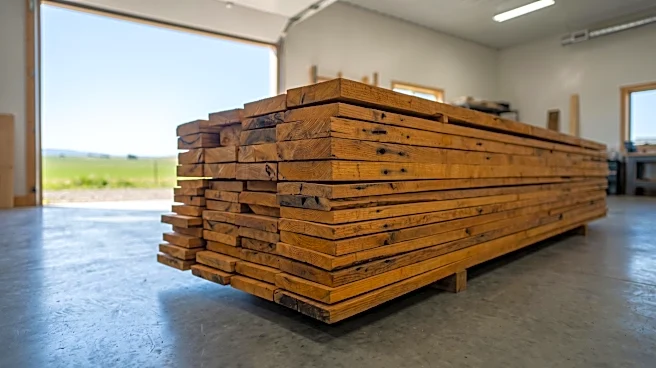
Paul Van Marter, a Montana craftsman, is meticulously dismantling a century-old grain elevator in Hinsdale, Montana, board by board. Instead of demolition, Van Marter is reclaiming the lumber and other materials to give them a second life. He uses the reclaimed
wood for various purposes, including wainscoting, trim, flooring, cabinets, fencing, and hog pens. The process is labor-intensive and time-consuming, often taking two to three years to completely dismantle an elevator, remove nails, and prepare the lumber. Van Marter relocates to the town where the elevator is located and primarily works alone, occasionally hiring assistance. He emphasizes the importance of ensuring that much of the reclaimed material remains local, contributing to the community's homes and structures. This project in Hinsdale is one of ten grain elevators Van Marter has dismantled, with previous projects spanning Oregon, Washington, and several Montana communities.
Why It's Important?
This initiative by Paul Van Marter is significant for its environmental, historical, and economic implications. Environmentally, it promotes sustainable practices by repurposing existing materials, reducing waste, and minimizing the demand for new lumber. Historically, it preserves a tangible connection to Montana's agricultural past, as grain elevators were once vital community hubs. By giving these materials a new life, Van Marter ensures that the stories and heritage embedded in the wood continue to resonate within the community. Economically, his work supports local craftsmanship and provides unique, high-quality materials for construction and renovation projects. Homeowners benefit from distinctive, durable wood with a rich history, often becoming a focal point of their homes. This approach offers a sustainable alternative to traditional demolition, which often results in waste and the loss of historical structures.
What's Next?
Paul Van Marter anticipates another year and a half of work on the Hinsdale grain elevator, with Montana winters slowing but not stopping his progress. As the dismantling continues, more reclaimed lumber will become available for local use, potentially inspiring other communities to consider similar preservation and repurposing projects for their historic structures. The success of Van Marter's work could lead to increased interest in architectural salvage and sustainable building practices across the region. His efforts highlight a growing appreciation for historical materials and the craftsmanship involved in their reuse. The long-term impact could be a shift in how communities view and manage their aging infrastructure, moving towards more sustainable and historically conscious methods of development and renovation.
Beyond the Headlines
Van Marter's work transcends simple reclamation; it embodies a deeper cultural and ethical commitment to heritage and sustainability. Grain elevators, often seen as mere abandoned buildings, are viewed by Van Marter as repositories of generations of family stories and community history. His process of carefully deconstructing these structures, rather than demolishing them, reflects a profound respect for the past and the materials themselves. This approach challenges the modern throwaway culture by demonstrating the inherent value and potential for reuse in seemingly obsolete structures. The emotional connection homeowners feel to the reclaimed wood, often describing it as the 'focal point' of their homes, speaks to the enduring human desire for authenticity and connection to history in their living spaces. This project serves as a powerful example of how individual initiative can contribute to environmental stewardship and cultural preservation.