


What's Happening?
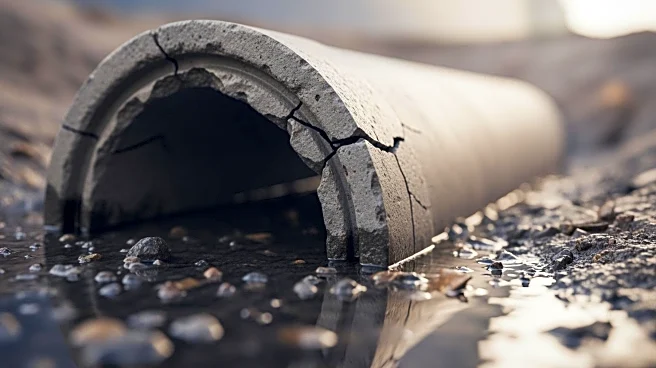
A major sewer pipe collapse in Washington, DC, has resulted in 250 million gallons of sewage spilling into the Potomac River, causing a significant environmental and public health issue. The failure of the Potomac Interceptor line, a 65-year-old infrastructure,
has led to widespread finger-pointing among various stakeholders, including Maryland, Virginia, DC, and the National Park Service. The incident highlights the challenges of maintaining aging infrastructure in one of the wealthiest regions in the United States. Despite previous warnings and plans to rehabilitate the line, the collapse occurred, raising questions about the effectiveness of current infrastructure management and maintenance practices.
Why It's Important?
The collapse of the sewer pipe in Washington, DC, underscores the critical need for investment in infrastructure maintenance and modernization. It highlights the potential consequences of neglecting essential public services, which can lead to environmental damage and public health risks. The incident also raises concerns about the allocation of resources and the prioritization of infrastructure projects in wealthy regions. The situation serves as a reminder of the importance of proactive maintenance and the need for competent leadership in managing public utilities. The ongoing issues with infrastructure in urban areas could have broader implications for economic development and quality of life.