






What's Happening?
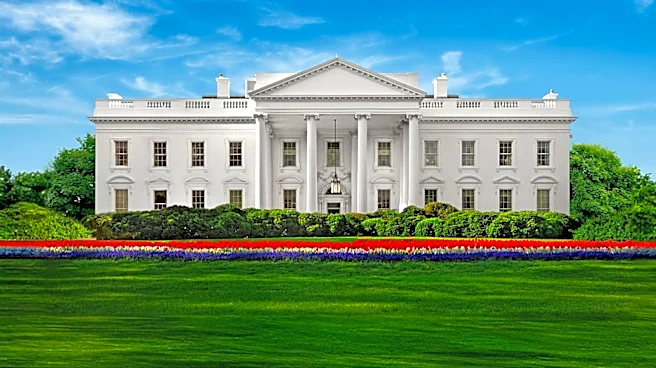
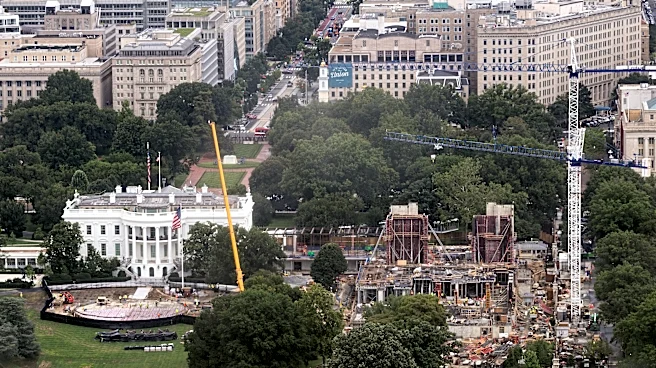
A federal appeals court has ordered the Trump administration to cease construction on a $400 million ballroom at the White House, citing the need for congressional approval. The project, which involves building a 90,000-square-foot ballroom on the site
of the demolished East Wing, was challenged by the National Trust for Historic Preservation. The court's decision emphasizes that the President cannot fundamentally alter the White House without legislative consent. President Trump has defended the project as a security necessity, describing it as a 'military center' with advanced security features. The administration plans to appeal the decision to the U.S. Supreme Court.
Why It's Important?
The court's ruling represents a significant check on presidential authority, reinforcing the principle that major alterations to national landmarks require congressional oversight. This decision could set a precedent for future administrations regarding the scope of executive power in modifying historic sites. The controversy surrounding the ballroom project highlights the tension between security needs and preservation of national heritage. The case may influence public discourse on the balance between executive actions and legislative approval, particularly in matters involving significant financial expenditures and historical preservation.
What's Next?
The Trump administration's appeal to the Supreme Court will be closely monitored, as it could redefine the boundaries of presidential authority in altering national landmarks. If the Supreme Court upholds the appeals court's decision, it may lead to increased scrutiny of executive projects and reinforce the role of Congress in overseeing such initiatives. The outcome of this case could impact future presidential projects and the administration's approach to security enhancements at the White House. Stakeholders, including preservationists and political leaders, will likely engage in discussions on the implications of this ruling.