





What's Happening?
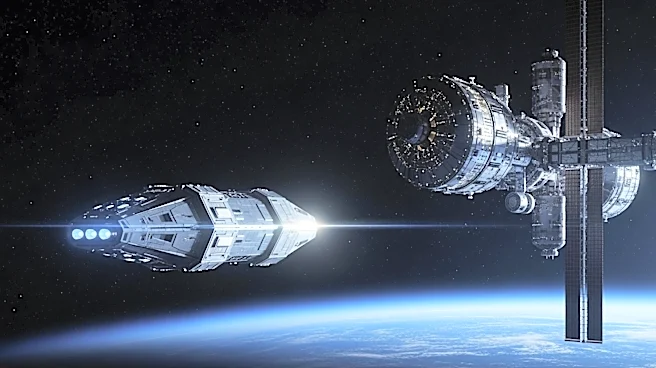
The uncrewed Roscosmos Progress 95 spacecraft successfully docked with the International Space Station (ISS) at the aft port of the Zvezda module. This docking occurred at 8 p.m. EDT on a Monday, following its launch from the Baikonur Cosmodrome in Kazakhstan.
The spacecraft is carrying approximately three tons of food, fuel, and supplies intended for the Expedition 74 crew. This mission is part of a routine resupply effort to ensure the continuous operation and support of the ISS crew. The Progress 95 will remain attached to the ISS for about six months, after which it will be loaded with trash and debris from the station and will undergo a planned destructive re-entry into Earth's atmosphere.
Why It's Important?
The successful docking of the Progress 95 spacecraft is crucial for maintaining the operational capabilities of the ISS. The delivery of essential supplies such as food and fuel is vital for the well-being and productivity of the crew aboard the station. This mission underscores the importance of international collaboration in space exploration, as the ISS is a joint project involving multiple countries. The resupply missions also highlight the logistical challenges and technological achievements involved in sustaining human life in space. The ability to regularly resupply the ISS ensures that scientific research and experiments can continue without interruption, contributing to advancements in various fields including space science, biology, and materials science.
What's Next?
Following its six-month stay at the ISS, the Progress 95 spacecraft will be loaded with waste materials from the station. It will then undock and perform a controlled re-entry into Earth's atmosphere, where it will burn up, safely disposing of the station's trash. Future resupply missions are planned to continue supporting the ISS, with various international partners contributing to the effort. These missions are scheduled regularly to ensure the continuous operation of the ISS and the safety of its crew. The ongoing collaboration between space agencies like NASA and Roscosmos is expected to further enhance the capabilities and research output of the ISS.