



What's Happening?
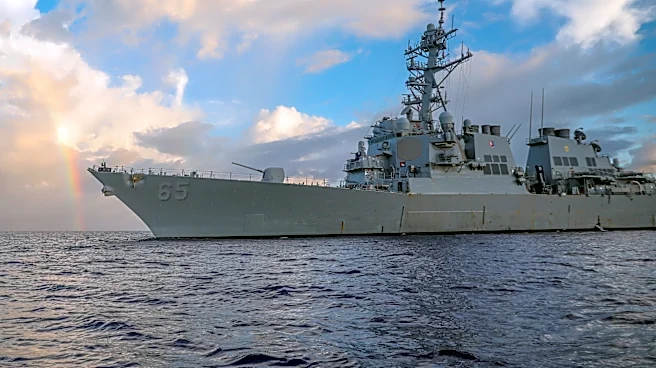
The guided-missile destroyer USS Benfold suffered a four-day power outage last month while operating in the South China Sea. The incident, which occurred on July 24, was caused by an 'engineering casualty' involving one of the ship's generators, according
to Cmdr. Matthew Comer, spokesperson for the 7th Fleet. The loss of power severely impacted essential services on board, including potable water, galley services, toilets, and air conditioning. Despite the challenging conditions, no injuries to the crew were reported, and their resilience was commended. The USS Benfold received support from other vessels in the George Washington Carrier Strike Group, with the cruiser USS Robert Smalls providing meals to the sailors. The ship was subsequently towed by commercial tugboats to Subic Bay, Philippines, arriving on July 28. Power was restored on July 30, and all necessary repairs were completed by August 7. The USS Benfold departed Subic Bay on August 8, with all systems functioning normally to resume routine operations in the U.S. 7th Fleet.
Why It's Important?
This incident highlights significant operational challenges and potential vulnerabilities for U.S. naval assets, particularly in strategically sensitive regions like the South China Sea. A multi-day power outage on a destroyer, which is equipped with advanced combat systems, raises questions about the readiness and maintenance of critical naval infrastructure. The South China Sea is a contested area, and an incapacitated U.S. warship could be perceived as a vulnerability, potentially emboldening adversaries or complicating regional stability. The reliance on external support for basic necessities like food and water, and the need for towing to a foreign port for repairs, underscore the logistical complexities and potential risks associated with such failures. Furthermore, the delayed public disclosure of the incident, nearly a month after it occurred, could fuel concerns about transparency regarding the operational status of U.S. naval forces. This event also draws attention to the demanding conditions faced by sailors during prolonged deployments, as similar concerns have been raised regarding other U.S. Navy vessels.
What's Next?
The U.S. Navy is currently investigating the cause of the power failure aboard the USS Benfold. This investigation will likely focus on identifying the specific engineering issues that led to the generator casualty and assessing whether there are broader systemic problems that need to be addressed across the fleet. The findings of this investigation could lead to changes in maintenance protocols, equipment upgrades, or operational procedures for U.S. Navy destroyers. There may also be increased scrutiny from Congress regarding the readiness of naval vessels, especially given the strategic importance of the 7th Fleet's area of responsibility. Republican Rep. Don Bacon has already called for congressional oversight and testimony from top Navy officials. The Navy will likely emphasize measures to prevent similar incidents and ensure the continuous operational capability of its ships, particularly those deployed in critical international waters. The incident may also prompt a review of contingency plans for power outages and other engineering casualties on deployed vessels.
Beyond the Headlines
The prolonged power outage on the USS Benfold in the South China Sea carries deeper implications beyond immediate operational concerns. It underscores the harsh realities and extreme conditions faced by naval personnel when critical systems fail far from home. The description of the crew's experience—lacking potable water, proper sanitation, and air conditioning in a hot environment—highlights the profound impact on morale and well-being. This incident serves as a stark reminder of the human element in military operations and the psychological toll that such breakdowns can exact. From a broader strategic perspective, the event could influence perceptions of U.S. naval power and reliability among allies and potential adversaries in the Indo-Pacific region. While the Navy asserts the ship was protected, the vulnerability of a major warship for an extended period could be exploited for propaganda or intelligence gathering. The rarity of such a prolonged outage on a modern warship also prompts questions about the aging infrastructure of some naval vessels and the ongoing challenges of maintaining a technologically advanced fleet in constant deployment.