






What's Happening?
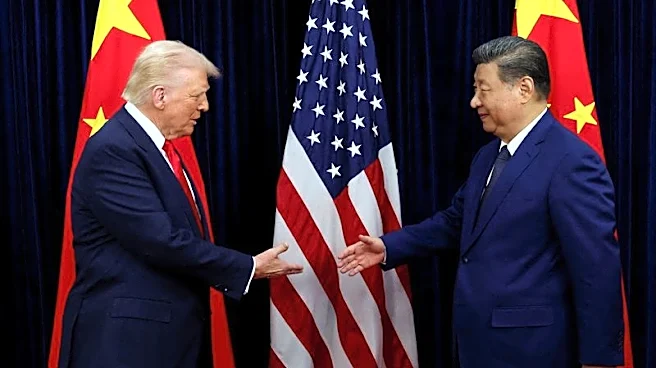
Taiwanese civilians are increasingly participating in self-defense courses due to growing concerns over potential military actions by China. This surge in self-defense training comes as President Trump is scheduled to meet with Chinese President Xi Jinping.
The meeting is anticipated to potentially address Taiwan's future, given China's longstanding claim over the island. The Taiwanese public's response reflects anxiety over the possibility of China using force to assert its claim, a scenario that has been a persistent concern in the region.
Why It's Important?
The heightened self-defense activities among Taiwanese civilians underscore the island's precarious geopolitical position. Taiwan's strategic importance is amplified by its advanced semiconductor industry, which is crucial to the U.S. in maintaining technological superiority over China. The U.S. has historically maintained a policy of strategic ambiguity regarding Taiwan, balancing its support for Taiwan's defense with diplomatic relations with China. Any discussions between President Trump and President Xi that touch on Taiwan could have significant implications for regional stability and U.S.-China relations.
What's Next?
As the Trump-Xi summit approaches, stakeholders will be closely monitoring any statements or agreements that could impact Taiwan's status. The U.S. may face pressure to clarify its stance on Taiwan, especially if discussions suggest a shift in the current balance. The outcome of the summit could influence future U.S. arms sales to Taiwan and affect the island's defense strategies. Additionally, regional allies and international observers will be keen to see how these developments might alter the geopolitical landscape in East Asia.