
What's Happening?
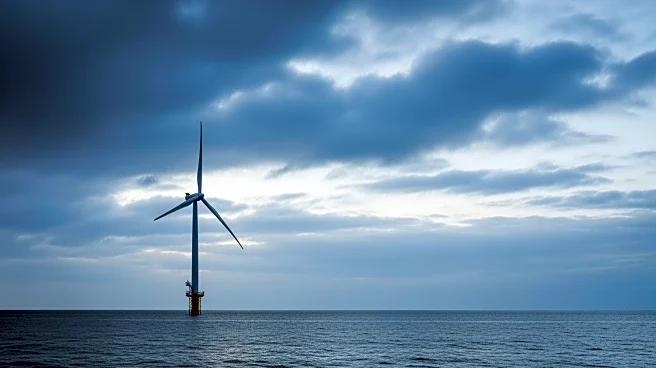
The Trump administration has paused the Coastal Virginia Offshore Wind project, the largest of its kind in the U.S., along with four other wind farms on the East Coast. This decision has led to a significant
drop in Dominion Energy's stock, the utility company behind the project, which fell by more than 4%. The Interior Department stated that the pause is to allow time to assess potential national security risks posed by these projects, particularly radar interference from turbine blades and reflective towers. The projects affected include Vineyard Wind 1, Revolution Wind, Sunrise Wind, and Empire Wind 1. The Coastal Virginia Offshore Wind project, consisting of 176 turbines, was expected to power over 600,000 homes and was slated for completion next year. Dominion Energy has expressed concerns that halting the project could threaten grid reliability and lead to energy inflation and job losses.
Why It's Important?
The suspension of these wind projects highlights the ongoing tension between renewable energy development and national security considerations. The decision impacts the U.S. wind industry, potentially slowing down the transition to renewable energy sources. It also affects the economic interests of companies like Dominion Energy and international developers such as Denmark's Orsted and Norway's Equinor, whose stocks have also been affected. The halt could lead to increased electricity prices, particularly in Virginia, where demand is rising due to the growth of data centers and artificial intelligence applications. This move may also influence political dynamics, as it contrasts with the renewable energy expansion plans of Virginia's incoming governor, Abigail Spanberger.
What's Next?
The federal government will work with leaseholders and state partners to explore ways to mitigate the identified national security risks. The outcome of these assessments could determine whether the projects will proceed or face further delays. Political leaders and stakeholders in the energy sector will likely engage in discussions to balance national security with the need for renewable energy. The decision may also prompt legislative or regulatory responses aimed at addressing the concerns raised by the administration.