
What's Happening?
President Trump's administration is actively seeking loopholes and alternative methods to advance its policy objectives following multiple legal setbacks from the Supreme Court and lower courts. Despite
rulings that have limited his authority on several key priorities, the administration has demonstrated an unwillingness to concede. Examples include testing the Supreme Court's ruling on protections for Federal Reserve officials by attempting to fire Fed Governor Lisa Cook, and replacing executive orders on birth tourism with new measures that challenge birthright citizenship. Additionally, after a court struck down global tariffs, the administration implemented new 10% to 12.5% duties tied to forced labor concerns. A senior administration official stated that President Trump will not allow his objectives to be undermined by court limitations. This approach is evident in various areas, including a lawsuit filed by 25 Democratic attorneys general challenging the new tariff regime, alleging it exceeds presidential authority. The administration's legal strategy is being led by a team of President Trump's former personal lawyers, including Attorney General Todd Blanche, White House counsel Will Scharf, and Solicitor General John Sauer.
Why It's Important?
This persistent challenge to judicial rulings by President Trump's administration carries significant implications for the balance of power within the U.S. government and the rule of law. The administration's efforts to circumvent court decisions could set a precedent for future executive actions, potentially eroding the judiciary's role as a check on presidential authority. For industries, the new tariffs, despite being framed around forced labor concerns, introduce uncertainty and potential economic impact, as they affect numerous countries and could lead to retaliatory measures. The ongoing legal battles also highlight a broader tension between the executive and judicial branches, with judges consistently affirming congressional powers. This dynamic could influence future legislative processes and the interpretation of constitutional authorities. The situation also raises questions about the long-term stability of U.S. policy, as executive actions are being challenged and modified in response to judicial oversight, creating an environment of legal and policy flux.
What's Next?
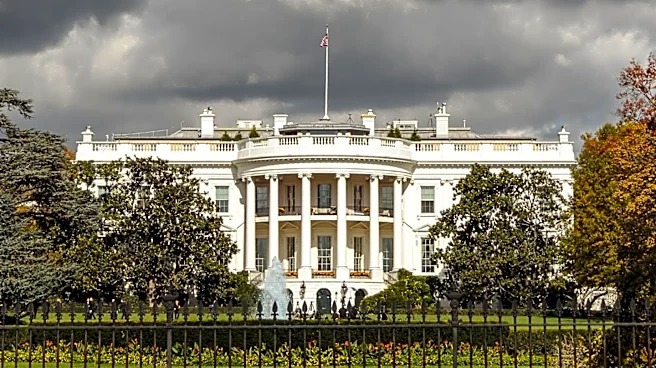
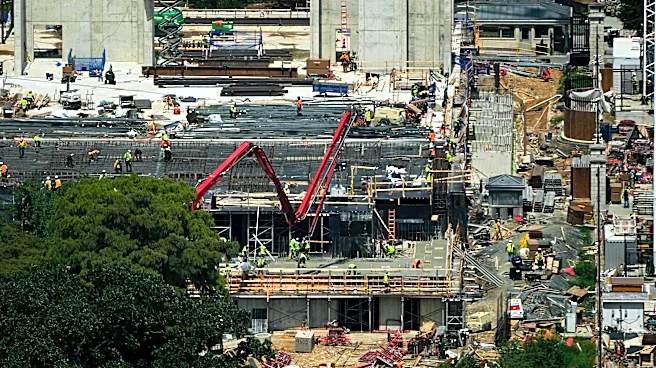
The legal challenges against President Trump's administration are expected to continue, with ongoing scrutiny of the new tariff regime and other executive actions. The lawsuit filed by 25 Democratic attorneys general regarding the tariffs will proceed, potentially leading to further court decisions that could either uphold or strike down these new duties. President Trump is also petitioning the Supreme Court to intervene in a dispute over building a ballroom on the White House complex, a request that legal experts like Norm Eisen anticipate will be denied. Furthermore, efforts to re-inscribe President Trump's name on the John F. Kennedy Center for Performing Arts, despite a federal court ruling against it, indicate a continued push to assert presidential influence even in areas where judicial decisions have been made. These ongoing legal battles will likely shape the boundaries of executive power and the judiciary's role in the coming months, with potential for further appeals and new legal interpretations.
Beyond the Headlines
The administration's consistent efforts to find 'loopholes' in court rulings reveal a deeper philosophical conflict regarding the separation of powers and the interpretation of the U.S. Constitution. This approach, characterized by some as showing 'very little respect for the rule of law,' could have lasting implications for the institutional norms of American governance. The appointment of President Trump's former personal lawyers to key legal roles within the administration suggests a highly centralized and loyal legal strategy, which may prioritize the President's objectives over traditional legal interpretations. The repeated clashes with the judiciary, even with judges appointed by President Trump, underscore a growing tension where judicial independence is being tested. This dynamic could lead to a re-evaluation of the judiciary's role in a highly politicized environment and potentially influence public trust in governmental institutions. The ethical implications of circumventing legal decisions, even if technically within legal bounds, could also contribute to a broader debate about accountability and the integrity of the executive branch.