




What's Happening?
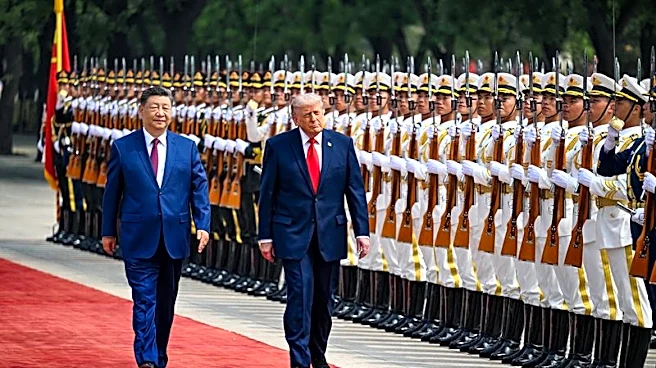
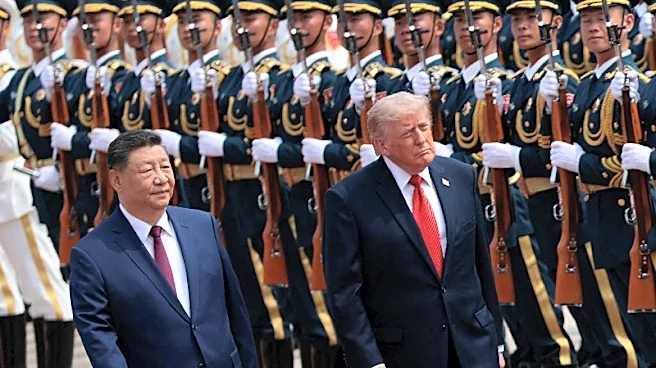
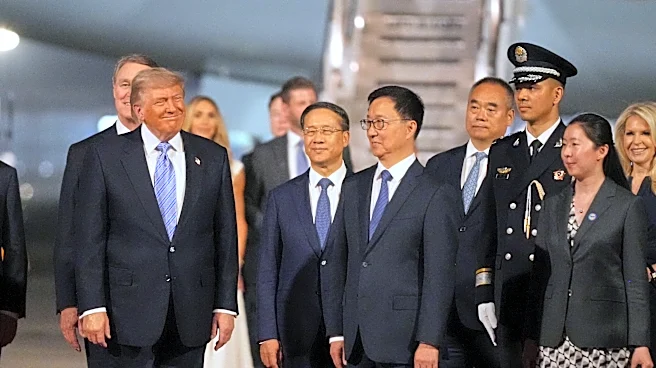
President Trump has returned to the United States following a two-day summit in Beijing with Chinese President Xi Jinping. The visit, marked by ceremonial displays, did not result in significant economic agreements, according to analysts and former U.S.
officials. Expectations for major trade deals, including large-scale purchases of U.S. agricultural products and Boeing aircraft, were not met. Discussions on various issues, such as tariffs, export controls, and market access, remain unresolved. The summit aimed to stabilize U.S.-China relations, but concrete outcomes were limited, leaving many economic and diplomatic questions unanswered.
Why It's Important?
The summit's limited achievements highlight the ongoing challenges in U.S.-China relations, particularly in the economic sphere. The lack of substantial agreements could affect U.S. industries reliant on Chinese markets, such as agriculture and aerospace. The diplomatic efforts to stabilize relations are significant, given the recent history of trade tensions and tariffs. However, the absence of clear progress may lead to continued uncertainty for businesses and investors. The situation underscores the complexities of international diplomacy and the need for sustained engagement to address bilateral issues.
What's Next?
Further announcements and negotiations are anticipated as both countries continue to address unresolved issues. The establishment of a 'Board of Trade' and 'Board of Investment' may facilitate future discussions and help manage trade relations. Stakeholders in both countries will be watching for developments that could impact tariffs, market access, and economic cooperation. The broader geopolitical context, including tensions in the South China Sea and technological competition, will also influence future interactions between the U.S. and China.