






What's Happening?
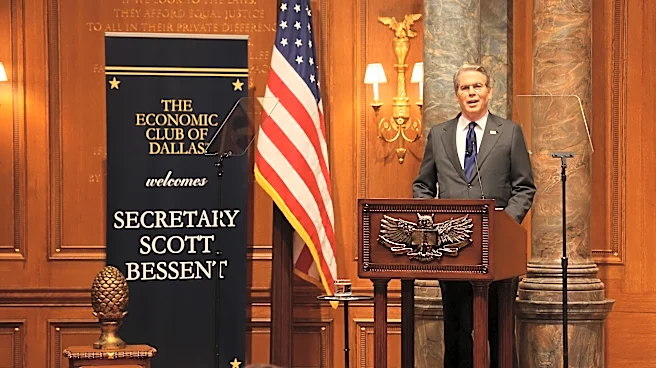
Treasury Secretary Scott Bessent is collaborating with White House budget director Russell Vought on a "fiscal consolidation plan" aimed at addressing the approximately $2 trillion annual budget deficit. This plan is slated for release after the upcoming
election. The current federal government debt is accumulating as tax revenues fall short of increasing expenditures on programs like Medicare, Medicaid, and Social Security. Interest payments on the national debt now exceed $1 trillion annually, surpassing military spending. Experts suggest that deficit reduction will likely involve a combination of tax increases and spending cuts, with Medicare expenditure trims identified as a primary area for savings. The administration has been vocal about the need to tackle the deficit, with Secretary Bessent repeatedly emphasizing the forthcoming plan since August.
Why It's Important?
The persistent $2 trillion annual budget deficit poses a significant threat to the U.S. economy, potentially leading to higher interest rates and increased national debt. The rising cost of servicing this debt, which now surpasses the Pentagon's budget, indicates a growing fiscal strain. If left unaddressed, this could lead to sovereign debt downgrades and increased volatility in financial markets. The proposed fiscal consolidation plan is crucial for stabilizing the nation's finances and ensuring long-term economic health. Trimming Medicare expenditures, as suggested by experts, could not only reduce the deficit but also lower healthcare costs for patients, benefiting a broad segment of the population. The outcome of these efforts will directly impact taxpayers, beneficiaries of federal programs, and the overall stability of the U.S. financial system.
What's Next?
The fiscal consolidation plan developed by Treasury Secretary Scott Bessent and White House budget director Russell Vought is expected to be released following the election. This timing suggests that the specifics of the plan will be subject to the political landscape and the composition of the new Congress. Given the current political climate, any proposed changes involving tax increases or spending cuts, particularly in areas like Medicare, are likely to face intense scrutiny and debate from both Democrats and Republicans. The effectiveness of the plan will depend on bipartisan cooperation, which has historically been challenging for significant fiscal reforms. The Federal Reserve's ability to manage inflation could also be influenced by the government's success in reducing the deficit, as monetary and fiscal restraint are both considered essential for economic stability.
Beyond the Headlines
The ongoing discussions around the budget deficit and the impending fiscal consolidation plan highlight a deeper structural challenge within the U.S. economy: the imbalance between government spending and revenue. The increasing reliance on borrowing to fund essential programs and services raises questions about intergenerational equity and the sustainability of current fiscal policies. The political difficulty in implementing spending cuts or tax increases underscores the broader societal challenge of balancing immediate needs with long-term financial responsibility. Furthermore, the debate over Medicare expenditures touches upon the ethical considerations of healthcare access and affordability for an aging population. The resolution of these issues will not only shape the nation's economic future but also reflect fundamental choices about the role of government and collective welfare.