


What's Happening?
The U.S. Department of Homeland Security (DHS) Science and Technology Directorate (S&T) National Urban Security Technology Laboratory (NUSTL) manages the System Assessment and Validation for Emergency Responders (SAVER) Program. Established in 2004, the SAVER Program aims
to assist emergency responders in making informed procurement decisions for equipment. It achieves this by producing over 1,100 publications, including focus group reports, market surveys, assessment reports, technotes, application notes, handbooks, and guides. These documents provide valuable information to help responders and purchasers evaluate and select appropriate equipment. The SAVER Program also offers guidance on the use of standards when selecting and purchasing responder equipment, explaining their importance, how to verify compliance, and how to incorporate them into procurement efforts. Publicly releasable SAVER documents are available in the SAVER Document Library, while those with limited distribution can be accessed by members of the SAVER Community.
Why It's Important?
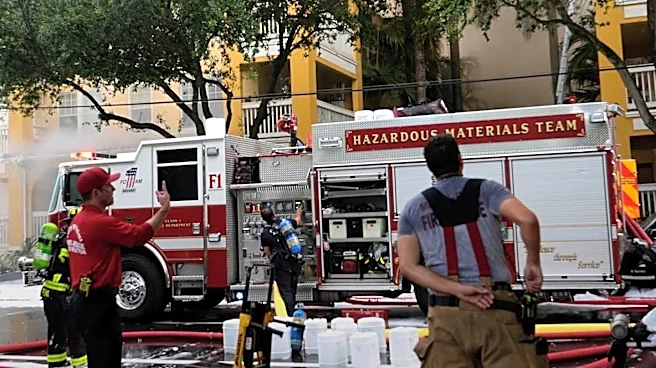
The SAVER Program is crucial for enhancing the operational effectiveness and safety of emergency responders across the U.S. By providing objective, evidence-based information on equipment, it helps ensure that fire departments, law enforcement agencies, and other first responders acquire reliable and suitable tools for their critical missions. This program prevents wasteful spending on ineffective equipment and promotes the adoption of standardized, high-quality technologies. In an environment where responders face diverse and evolving threats, from natural disasters to complex emergencies, having access to validated information is vital for making timely and effective decisions. The program's focus on standards also contributes to interoperability and consistency in emergency response, which can be life-saving during large-scale incidents. Ultimately, SAVER strengthens the nation's overall emergency preparedness and response capabilities, directly impacting public safety and national resilience.
What's Next?
The SAVER Program will continue to produce and update its extensive library of publications, adapting to new technologies and emerging threats. Emergency responders and procurement officials are encouraged to utilize these resources to inform their purchasing decisions. NUSTL will likely continue to engage with the responder community to identify new equipment needs and conduct assessments. The program's ongoing efforts will contribute to the continuous improvement of emergency response capabilities nationwide. Furthermore, the guidance on standards will remain a key component, promoting best practices and ensuring that equipment meets necessary performance and safety criteria. The program may also explore new ways to disseminate information and engage with stakeholders to maximize its impact on responder readiness.
Beyond the Headlines
The SAVER Program represents a foundational, yet often unseen, aspect of national security and public safety infrastructure. Its work highlights the critical importance of informed decision-making in the procurement of equipment for emergency services. Beyond the immediate benefit of better equipment, the program fosters a culture of evidence-based practice within the responder community, promoting efficiency and accountability in the use of public funds. It also underscores the complex interplay between technological innovation, operational needs, and standardization in critical fields. The program's long-term impact extends to the professionalization of emergency services, ensuring that responders are equipped with the best available tools to protect communities. This initiative also implicitly addresses the economic impact of disasters and emergencies by enhancing response capabilities, thereby reducing potential losses and accelerating recovery efforts. The SAVER Program is a testament to the continuous effort to improve the resilience and responsiveness of the U.S. in the face of diverse challenges.