






What's Happening?
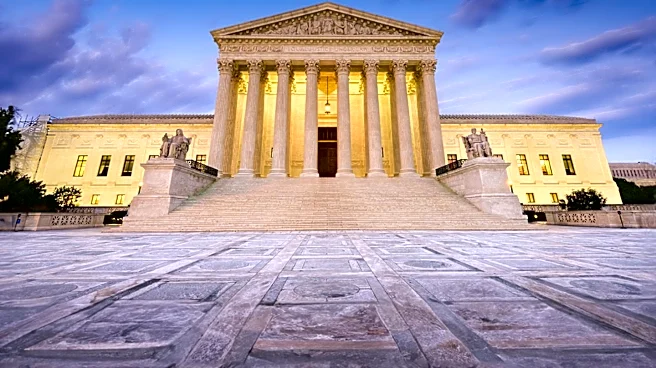
Following the Supreme Court's decision to strike down tariffs imposed under the International Emergency Economic Powers Act (IEEPA), billions in tariff refunds are now being returned to U.S. companies. However, this refund process has exposed a significant
design flaw: the government lacks a mechanism to ensure that these refunds reach the consumers who ultimately bore much of the cost through higher prices. Tariffs are legally paid by importers, but the economic burden is typically passed down the supply chain to consumers. When tariffs are refunded, the money goes back to the importer, who can then use it as they see fit, rather than directly compensating consumers for their overpayments. This issue is highlighted by the argument that the current system allows for a 'subsidy' to businesses, funded by consumer overpayments, without direct consumer benefit.
Why It's Important?
This situation is important because it reveals a fundamental inequity in how tariff policies are managed and unwound, impacting both businesses and consumers across the U.S. While the Supreme Court's ruling provided relief to companies from unconstitutional tariffs, the lack of a consumer-focused refund mechanism means that the financial burden, once shifted, is not effectively reversed. This can lead to consumer dissatisfaction and potential legal challenges, as seen in 'double recovery' lawsuits. For businesses, it creates a windfall that may not be ethically aligned with the source of the funds. The absence of a clear unwinding process also introduces uncertainty and potential for future disputes, making it difficult for companies to plan for and manage the financial implications of tariff changes. This highlights a gap in current U.S. trade policy that could have significant economic and social repercussions.
What's Next?
The current situation prompts a call for Congress to implement a comprehensive unwinding mechanism for temporary tariffs. This mechanism would need to specify who receives refunds, how the burden shifted downstream is addressed, whether claims accrue interest, and how the Treasury should account for potential refund liability while tariffs are in effect. The proposal draws parallels to Section 6416 of the Internal Revenue Code, which addresses federal excise taxes by requiring businesses to demonstrate they did not pass the tax on to customers, repaid them, or obtained their consent before receiving a refund. Without such a mechanism, future tariff impositions and their subsequent invalidations will likely continue to generate similar issues of inequitable distribution of refunds and potential consumer litigation. This legislative action would aim to create a more balanced and transparent system for managing the financial aftermath of tariff policies.
Beyond the Headlines
The deeper implication of this issue lies in the ethical and legal framework surrounding government-imposed economic measures. When the Supreme Court treats tariffs as a form of taxation, it suggests that their unwinding should be handled with the same rigor and checks as other tax refunds. The current system, which allows companies to retain tariff refunds while consumers remain uncompensated for higher prices, raises questions about economic justice and the role of government in protecting consumer interests during trade disputes. This could lead to a broader re-evaluation of how trade policies are designed, implemented, and ultimately reversed, emphasizing the need for built-in mechanisms that consider the entire supply chain and the ultimate payers of tariff costs. It underscores the importance of foresight in policy-making to prevent unintended consequences and ensure fairness across all stakeholders.