









What's Happening?
A June memo from the U.S. Department of Justice (DOJ) has indicated a shift in federal policy regarding the enforcement of community-based care for individuals with disabilities, particularly in Georgia. The memo argues that federal disability laws do
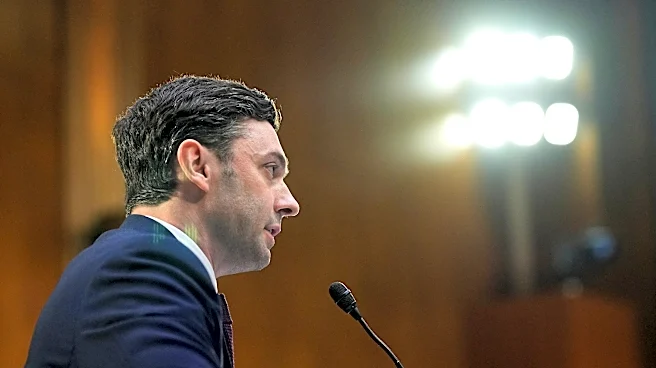
not mandate states to provide certain community-based services for people with disabilities that limit 'major life activities' as defined by the Americans with Disabilities Act. Furthermore, it states that the federal government lacks the authority to oversee and monitor whether states are providing these services, despite existing legal requirements. This interpretation challenges the legal precedent set by the 1999 Supreme Court decision in Olmstead v. L.C., which originated in Georgia and ruled against the unjustified institutionalization of people with disabilities. Disability advocates, including D’Arcy Robb of the Georgia Council on Developmental Disabilities, express concern that this could reduce pressure on states to fund and expand community-based services, potentially stalling progress in disability care reforms. U.S. Sen. Jon Ossoff has urged the DOJ to rescind the memo, calling it a 'shameful document' that could leave Georgians with disabilities vulnerable.
Why It's Important?
This DOJ memo is significant because it could fundamentally alter the landscape of disability care in the U.S., particularly in states like Georgia that have been under federal oversight. The Olmstead v. L.C. decision and subsequent settlement agreements, such as the 2010 agreement between the federal government and Georgia, have been instrumental in shifting care from institutions to community-based settings, allowing individuals with disabilities greater independence and quality of life. By signaling a withdrawal of federal enforcement, the DOJ memo could diminish the incentive for states to invest in and expand these crucial community services. This could disproportionately affect vulnerable populations, potentially leading to a regression in disability rights and access to care. Advocates fear that without federal pressure, states might reduce funding for community-based programs, forcing more individuals into institutionalized settings. The memo also raises questions about the interpretation and enforcement of the Americans with Disabilities Act and the balance of power between federal and state governments in ensuring civil rights.
What's Next?
The immediate future will likely see continued debate and potential legal challenges regarding the DOJ's interpretation. While the memo is a statement of the federal government's position, it does not automatically overturn existing law or legal precedent, as noted by Devon Orland, litigation director at the Georgia Advocacy Office. However, the lack of federal enforcement could embolden states to scale back community-based services. In Georgia, Commissioner Kevin Tanner, who oversees state behavioral health and disability services, has stated his department's commitment to complying with the remaining parts of the Olmstead settlement, despite the DOJ memo. An independent report on Georgia's compliance with the settlement is expected in October, which will provide a snapshot of the state's progress. The upcoming gubernatorial election in Georgia will also be critical, as the next governor will inherit a disability care system at a pivotal moment, with their policies potentially shaping the future of disability services in the state. Advocacy groups are expected to increase pressure on state officials to maintain and expand community-based care.
Beyond the Headlines
The DOJ memo's implications extend beyond immediate policy changes, touching upon the broader philosophical and ethical underpinnings of disability rights in the U.S. The shift away from federal oversight could signify a move towards greater state autonomy in disability care, which, while potentially allowing for tailored local solutions, also carries the risk of inconsistent standards and reduced protections. This development could reignite discussions about the role of federal mandates in ensuring civil rights and the extent to which states can be relied upon to uphold these rights without external pressure. It also highlights the ongoing tension between fiscal conservatism and social welfare, especially as states face potential Medicaid cuts. The memo could inadvertently foster a two-tiered system of care, where the quality and availability of services for people with disabilities vary significantly based on state-level political will and financial capacity. This could lead to a fragmentation of disability rights, challenging the national uniformity intended by landmark legislation like the ADA and the Olmstead decision.