




What's Happening?
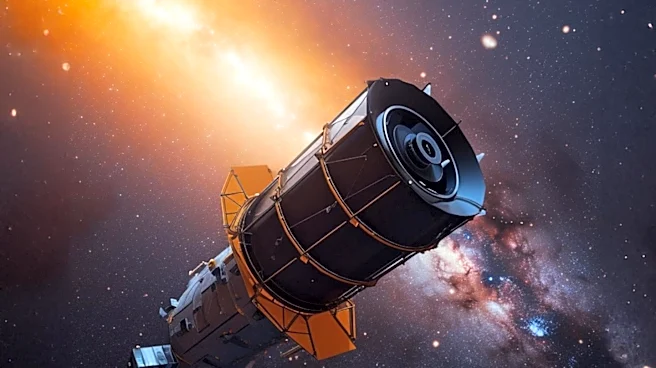
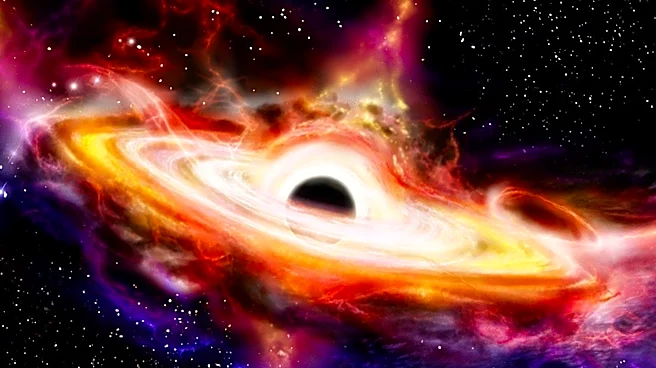
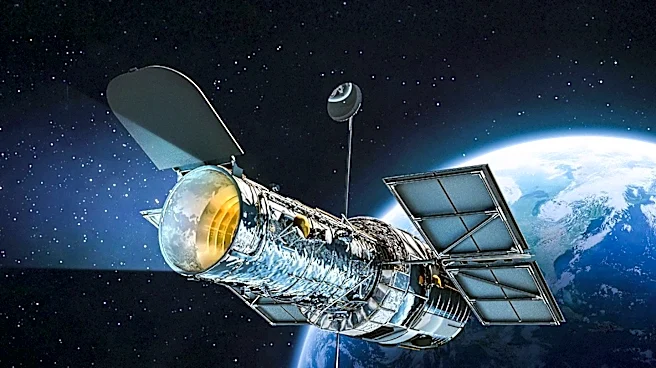
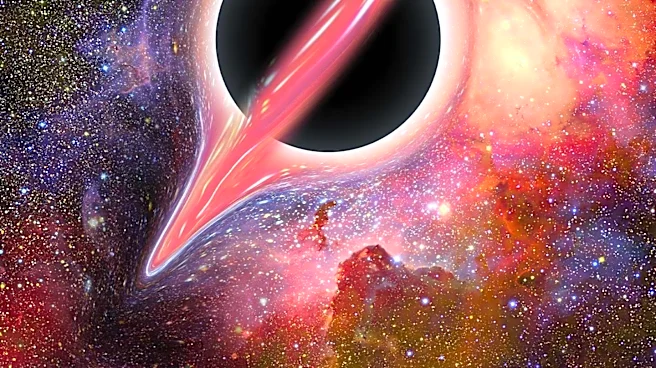
NASA's Neil Gehrels Swift Observatory has observed a supermassive black hole consuming a star far from the center of its galaxy, a rare occurrence as such black holes are typically found at galactic cores. This event, described as an 'orphan' black hole,
is significant because it is one of the few confirmed instances of a black hole located at such a distance from a galaxy's center. The discovery was made as part of efforts to identify star-shredding events, which can reveal otherwise invisible supermassive black holes. This particular observation has validated a new technique for detecting these phenomena.
Why It's Important?
The discovery of a supermassive black hole consuming a star far from its galactic center challenges existing theories about the typical locations of such black holes. This finding could lead to a better understanding of the distribution and behavior of supermassive black holes in the universe. It also opens up new possibilities for detecting and studying these cosmic phenomena, which are crucial for understanding the dynamics and evolution of galaxies. The ability to identify 'orphan' black holes could significantly enhance our knowledge of the universe's structure and the role of black holes in galactic development.
What's Next?
Following this discovery, astronomers may employ the validated technique to search for more 'orphan' black holes, potentially leading to further insights into their distribution and characteristics. This could involve more targeted observations using the Swift Observatory and other telescopes to identify similar events. The findings may prompt a reevaluation of current models of galaxy formation and evolution, particularly concerning the role and prevalence of supermassive black holes outside galactic centers.