



What's Happening?
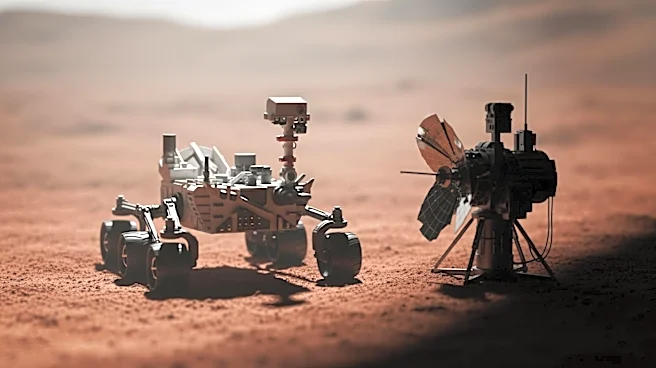
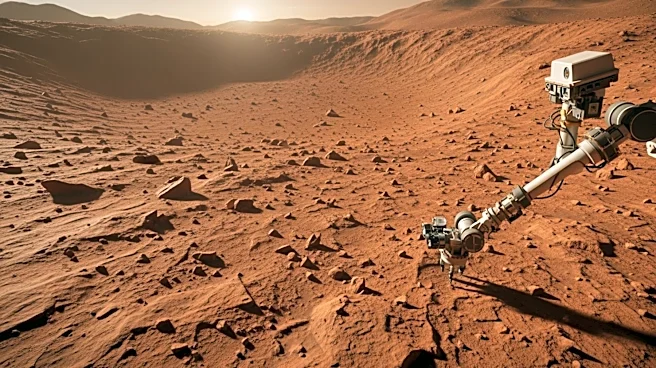
NASA's Curiosity rover is exploring a small crater on Mars, informally named 'Antofagasta,' to investigate its potential for revealing organic molecules. The crater, approximately 10 meters in diameter, may expose material that has been shielded from
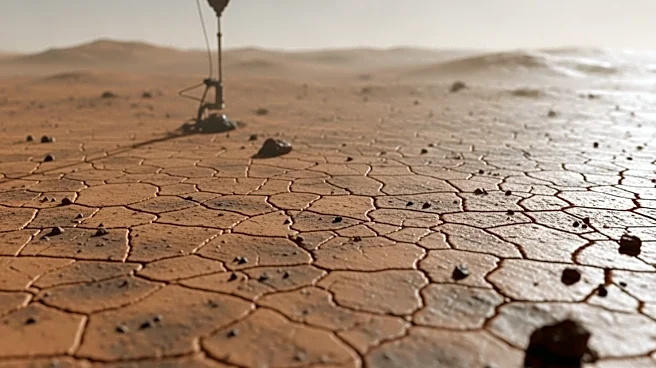
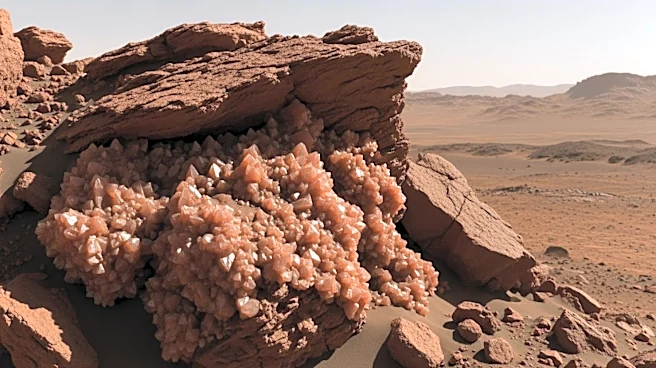
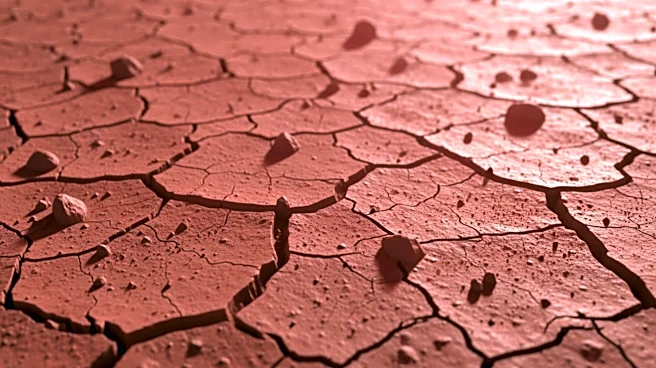
Mars' harsh surface conditions. Curiosity's mission team is particularly interested in the crater's potential to uncover complex chemistry that could provide insights into Mars' geological history. The rover's journey to Antofagasta has revealed intriguing rock textures, characterized by honeycomb-shaped polygons, which are being studied to understand their formation. The mission continues to monitor Mars' environment, including atmospheric conditions and dust activity, as the planet approaches its summer months.
Why It's Important?
The exploration of Antofagasta crater by Curiosity could yield significant scientific discoveries about Mars' past, particularly regarding the presence and preservation of organic molecules. Understanding the planet's geological and chemical history is crucial for assessing its habitability and potential for past life. The findings could also inform future missions, including those aimed at returning samples to Earth. The study of Martian craters provides valuable data on the planet's surface processes and environmental conditions, contributing to our broader understanding of Mars as a potential destination for human exploration.
What's Next?
Curiosity will continue its investigation of the Antofagasta crater, collecting images and chemical data to determine the presence of organic molecules and the crater's geological characteristics. The mission team will analyze the data to decide on potential drilling sites within the crater. The results of this exploration will guide future Mars missions, including those focused on sample collection and return. As Curiosity advances its mission, it will also continue to monitor Mars' atmospheric conditions, providing ongoing insights into the planet's climate and environmental dynamics.