



What's Happening?
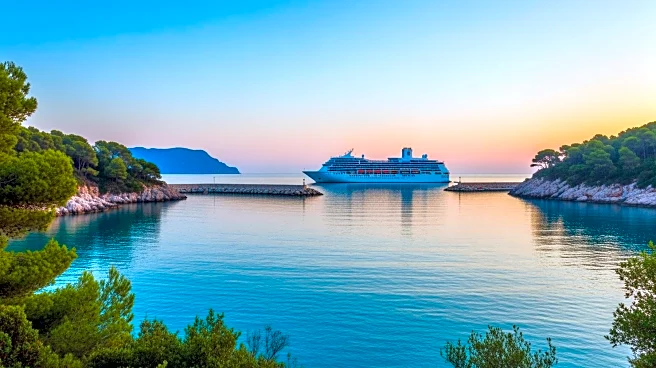
The French Riviera has implemented new regulations to limit the number of cruise passengers at its ports, including Nice and Villefranche. The decree, effective December 9, aims to address environmental concerns and manage overtourism while maintaining
the region's upscale image. The regulations set an average daily limit of 2,000 passengers, with a maximum of 3,000 on any given day, and restrict ships over 1,300 passengers to one per day per anchorage. These measures target larger cruise ships, encouraging them to dock in Marseille instead. The initiative also promotes adherence to the Sustainable Cruise Charter, which focuses on reducing environmental impact.
Why It's Important?
The new regulations reflect a growing trend among popular tourist destinations to balance economic benefits with environmental sustainability. By limiting cruise ship traffic, the French Riviera aims to preserve its natural beauty and appeal to high-end tourists, potentially increasing the quality of tourism rather than quantity. This approach could influence other regions facing similar challenges, prompting a shift towards more sustainable tourism practices. The emphasis on environmental responsibility also aligns with global efforts to combat climate change and reduce pollution, setting a precedent for the cruise industry to adopt greener practices.
What's Next?
The effectiveness of these regulations will likely be monitored closely, with potential adjustments based on their impact on local tourism and the environment. Stakeholders, including cruise lines and local businesses, may engage in discussions to find a balance that supports both economic interests and sustainability goals. The success of this initiative could lead to broader adoption of similar measures in other tourist-heavy regions, further encouraging the cruise industry to innovate and invest in environmentally friendly technologies and practices.