


What's Happening?
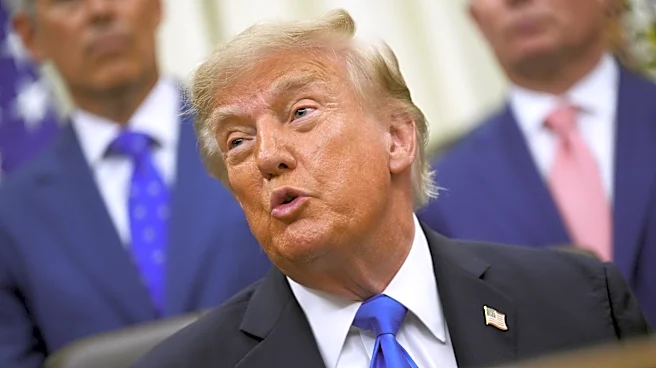
The Trump administration has recently eliminated the scientific finding that climate change poses a threat to human health and the environment. This action effectively removes the government's authority to combat climate change based on this scientific premise.
The decision was highlighted in a STEM lesson plan by Natalie Proulx, which posed a question to students regarding their reaction to this policy change. The move signifies a significant shift in the federal government's stance on climate change, moving away from acknowledging its dangers and the need for governmental intervention. This change impacts how federal agencies can approach environmental regulations and climate-related initiatives.
Why It's Important?
This decision by the Trump administration carries substantial implications for environmental policy, public health, and the U.S. economy. By disavowing the scientific finding that climate change endangers human health and the environment, the administration effectively dismantles a key legal and scientific basis for federal climate action. This could lead to a rollback of existing environmental regulations, hinder the development of new policies aimed at reducing greenhouse gas emissions, and potentially increase the U.S.'s reliance on fossil fuels. Industries involved in renewable energy and climate-friendly technologies may face reduced governmental support and incentives, while sectors that contribute to emissions might experience less regulatory pressure. Public health could be impacted by increased air and water pollution, and communities vulnerable to extreme weather events may face greater risks without federal protective measures. The decision also signals a broader ideological shift regarding the role of science in policymaking.
What's Next?
Following the Trump administration's decision, various stakeholders are expected to react. Environmental advocacy groups and scientific organizations will likely challenge the move through legal avenues and public campaigns, emphasizing the scientific consensus on climate change. State and local governments, particularly those committed to climate action, may intensify their own efforts to mitigate climate change and adapt to its effects, potentially creating a patchwork of environmental policies across the nation. Businesses in the renewable energy sector might seek alternative markets or private funding to continue their growth, while industries that benefit from relaxed environmental regulations may see opportunities for expansion. The long-term consequences could include increased legal battles over environmental protections and a potential divergence between federal and sub-national climate policies. Future administrations could also reverse this decision, depending on political shifts and public opinion.
Beyond the Headlines
The Trump administration's decision to revoke the scientific finding on climate change's danger extends beyond immediate policy implications, touching upon fundamental questions of scientific authority and governmental responsibility. This move could deepen the partisan divide on environmental issues, making it more challenging to achieve consensus on climate action in the future. It also raises concerns about the politicization of science, where scientific findings are dismissed or altered to align with political agendas. Ethically, the decision prompts a debate about the government's obligation to protect its citizens from foreseeable environmental threats. Culturally, it may influence public perception of climate change, potentially fostering skepticism or apathy among segments of the population. In the long term, this could lead to a re-evaluation of how scientific evidence is integrated into policy-making processes and the role of expert knowledge in democratic governance.