



What's Happening?
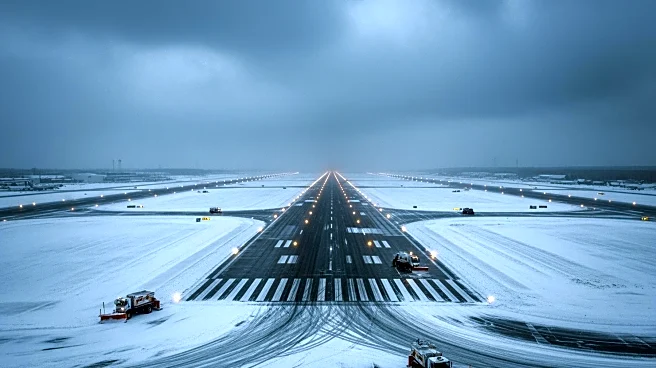
A severe winter storm has led to the cancellation and delay of thousands of flights across the United States, particularly affecting the Northeast region during the busy holiday travel season. As of Friday night, approximately 1,600 flights were cancelled
and 7,400 delayed, according to FlightAware, a flight tracking website. The most impacted airports include John F. Kennedy International, Newark Liberty, and LaGuardia, all serving the New York area. Other affected locations include Boston, Chicago, and Toronto, Canada. The National Weather Service has issued a winter storm warning, predicting up to 9 inches of snow in New York and southern Connecticut. Airlines such as JetBlue, Delta, Republic, and Southwest have cancelled hundreds of flights, while American and United Airlines have also reported significant cancellations. Travelers are advised to check with airlines for flight status updates.
Why It's Important?
The storm's impact on air travel highlights the vulnerability of transportation networks to severe weather, especially during peak travel periods. The disruptions could have significant economic implications, affecting airlines' operations and potentially leading to financial losses. Additionally, the storm poses safety risks for travelers and residents in the affected areas, prompting warnings from state governors and local officials. The situation underscores the importance of preparedness and effective communication in managing weather-related disruptions. The travel chaos could also influence public perception of airline reliability and customer service during adverse conditions.
What's Next?
As the storm progresses, further flight cancellations and delays are possible, potentially extending into the weekend. Airlines and airports will need to manage the backlog of affected passengers and reschedule flights. Travelers are advised to monitor weather updates and airline communications closely. Local authorities may implement additional safety measures, such as road closures or public transportation adjustments, to mitigate the storm's impact. The response to this storm could inform future strategies for handling similar weather events, emphasizing the need for robust contingency planning.