





What's Happening?
A report by the UN Food and Agriculture Organization (FAO) and the World Meteorological Organization (WMO), titled 'Extreme Heat and Agriculture,' reveals that increasing heatwaves are significantly impacting fruit yields, agricultural incomes, and food
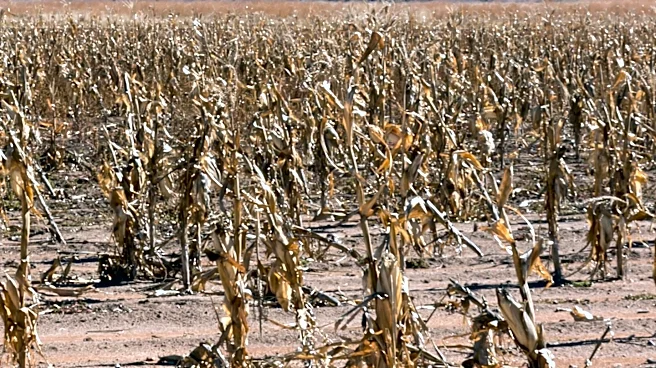
availability in Punjab's rain-fed farming areas in Pakistan. The report specifically notes that fruit yields in Punjab's high-rainfall zones have decreased by up to 50% due to heat stress. Beyond yield reduction, higher temperatures also accelerate the spoilage of vegetables and other perishable goods, leading to reduced market availability and contributing to price increases. These declining crop yields and post-harvest losses are directly reducing household incomes and limiting access to food for rural communities. The report also points out that women in these areas face additional exposure to extreme temperatures through activities like harvesting and water collection, with limited access to resources further hindering their ability to adapt.
Why It's Important?
This situation in Pakistan's Punjab underscores the severe and immediate consequences of extreme heat on agricultural systems and food security, a global concern that has implications for international food markets and aid. The significant reduction in fruit yields and accelerated spoilage of perishables can lead to increased food prices and scarcity, potentially impacting global supply chains and trade dynamics. For the U.S., while not directly affected by Punjab's fruit yields, such widespread agricultural disruptions in other parts of the world can contribute to global food price volatility and necessitate humanitarian aid efforts. The report's emphasis on the disproportionate impact on women highlights a critical social dimension, indicating that climate change exacerbates existing inequalities and complicates development efforts. This global trend of extreme heat affecting agriculture serves as a warning for all nations, including the U.S., to bolster climate resilience in their agricultural sectors.
What's Next?
The report identifies extreme heat as a growing global risk to agriculture, suggesting that rising temperatures will continue to contribute to drought, wildfires, and crop losses worldwide. Fruit and nut orchards are particularly vulnerable to heat stress, and declining yields may inadvertently encourage farmland expansion, which could further increase greenhouse gas emissions. In response, international organizations and national governments will likely need to focus on developing and implementing climate-resilient agricultural practices, improving early warning systems for extreme weather events, and providing support to vulnerable farming communities. Efforts to mitigate climate change and adapt agricultural systems will be crucial to prevent further reductions in food availability and income losses in affected regions. The findings will likely inform future policy discussions on climate adaptation and food security at international forums.
Beyond the Headlines
The long-term implications of such agricultural crises extend beyond immediate food shortages and economic losses. The cycle of declining yields potentially leading to farmland expansion for compensation could create a feedback loop, where efforts to mitigate one problem inadvertently worsen another by increasing greenhouse gas emissions. This highlights the complex interplay between climate change, agricultural practices, and environmental sustainability. Furthermore, the report's focus on women's increased vulnerability to extreme temperatures in agricultural activities points to deeper societal issues. Addressing these challenges requires not only technological and agricultural innovations but also social and economic reforms that empower marginalized groups and ensure equitable access to resources and climate information. The ethical dimension of climate justice becomes prominent, as those least responsible for climate change often bear its harshest consequences.