




What's Happening?
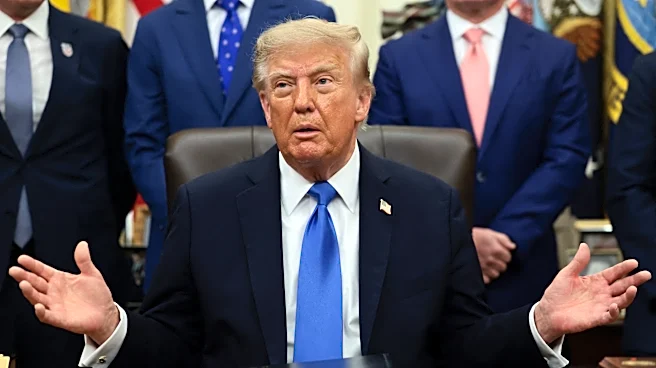
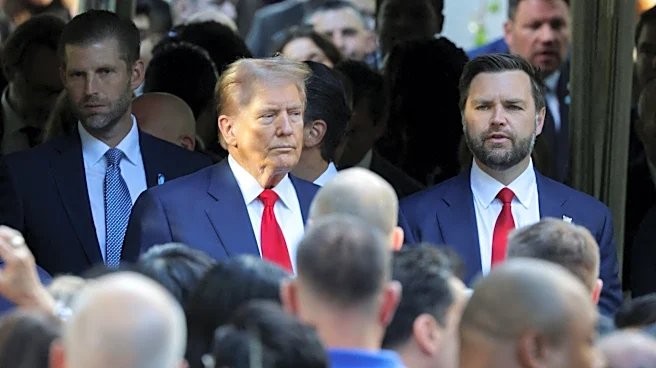
President Trump and Vice President JD Vance hosted a group of Hasidic Jewish community leaders from New York and New Jersey in the Oval Office on Thursday. This meeting marks the first such gathering at the White House in nearly five decades. Representatives
from Hasidic communities in Kiryas Joel, Lakewood, NJ, and Williamsburg, Brooklyn, were present. The visit was arranged by the White House Faith Office. During the meeting, Grand Rebbe Aaron Teitelbaum of Kiryas Joel reportedly recited a rare Jewish blessing reserved for kings and presented a leather-embossed copy of the prayer to President Trump. The President has historically garnered significant support from the Orthodox community, with estimates showing he won approximately 35-36% of the Jewish vote in 2024.
Why It's Important?
This historic meeting underscores President Trump's continued efforts to cultivate and strengthen his relationship with the Orthodox Jewish community, a key demographic that has shown strong support for him. The symbolic act of a Grand Rebbe reciting a blessing for a king in the Oval Office highlights the deep respect and religious significance attributed to the presidency by these leaders. For the Hasidic community, direct access to the highest levels of government provides an opportunity to advocate for their interests and concerns. For the Trump administration, it reinforces an image of broad religious support and a commitment to religious freedom, particularly relevant given his focus on fighting antisemitism and his close partnership with Israeli Prime Minister Benjamin Netanyahu.
What's Next?
The meeting is likely to be highlighted by the Trump administration as evidence of its strong ties with religious communities and its commitment to addressing issues important to Jewish voters. This could translate into continued political support from these communities in future elections. The event may also encourage other religious groups to seek similar direct engagements with the White House. Conversely, the meeting could draw scrutiny from those who question the separation of church and state or who disagree with the political alignment of certain religious leaders. The administration may continue to emphasize its actions against antisemitism and its pro-Israel stance to further solidify this support.
Beyond the Headlines
Beyond the immediate political implications, this meeting touches on the evolving relationship between religious communities and the U.S. government. The Satmar movement, represented at the meeting, holds a unique theological position regarding the creation of a sovereign state before the arrival of the Messiah, which adds a layer of complexity to their engagement with a president who frequently describes himself as the most pro-Israel in U.S. history. This dynamic reveals the intricate interplay of religious belief, political pragmatism, and national identity. The event also serves as a powerful visual symbol of religious leaders engaging directly with the executive branch, potentially influencing perceptions of religious influence in American politics and the role of faith in public life.