
What's Happening?
In 2025, Europe experienced unprecedented wildfires and heatwaves, marking it as one of the hottest years on record for the continent. According to the European Centre for Medium-Range Weather Forecasts,
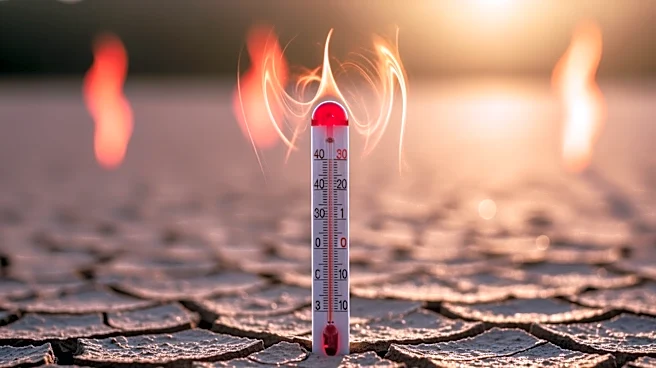
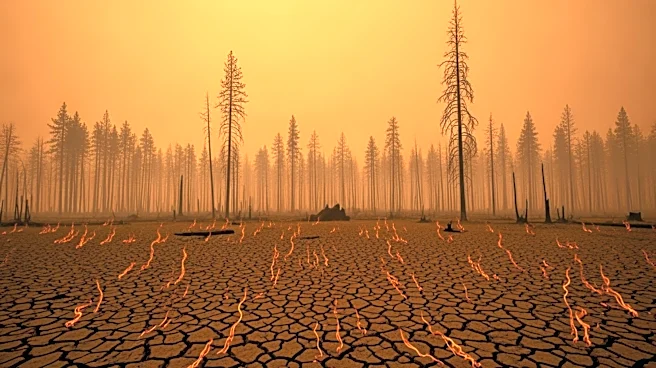
more than 95% of Europe faced above-average temperatures, with Scandinavia, Finland, and north-western Russia enduring a 21-day heatwave that reached 30°C even at the Arctic Circle. This extreme weather contributed to significant environmental impacts, including stunted plant and animal growth and the spread of invasive species. The heatwaves and dry conditions led to record wildfires, particularly in Portugal and Spain, where over 10,000 square kilometers burned, resulting in at least three fatalities. The wildfires emitted 47 million tonnes of carbon, setting new records for fire emissions in several European countries.
Why It's Important?
The extreme weather events of 2025 highlight the accelerating impact of climate change on Europe, the fastest-warming continent. The record temperatures and wildfires underscore the urgent need for climate action to mitigate future risks. The environmental consequences, such as biodiversity loss and increased carbon emissions, pose significant challenges for European ecosystems and public health. The events also emphasize the importance of transitioning to renewable energy sources, as demonstrated by Europe's record solar power generation in 2025. The continent's response to these challenges will be crucial in shaping global climate policy and adaptation strategies.
What's Next?
Europe is expected to continue facing climate-related challenges, including potential multi-year megadroughts similar to those in the western United States. European leaders are participating in international efforts to transition away from fossil fuels, as seen in the summit organized in Colombia following the COP30 climate summit. The focus will be on enhancing renewable energy adoption and implementing measures to adapt to future climate risks. The cost of inaction is projected to be significantly higher than proactive measures to address these impacts, making it imperative for Europe to lead in climate change mitigation and adaptation.
Beyond the Headlines
The 2025 climate events in Europe may have long-term implications for global climate policy and economic strategies. The increased frequency and severity of extreme weather could drive innovation in renewable energy technologies and infrastructure resilience. Additionally, the events may influence public opinion and political will, potentially accelerating legislative action on climate change. The need for international cooperation and shared responsibility in addressing climate risks will become increasingly apparent, as countries work together to mitigate the effects of global warming.