







What's Happening?
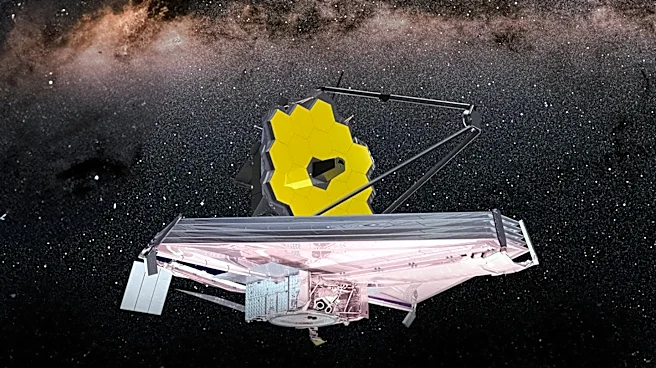
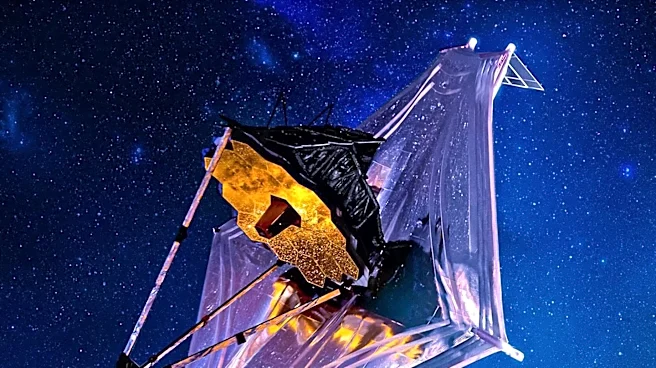
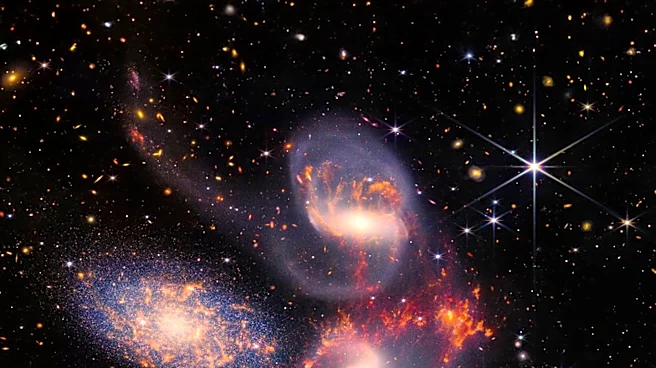
The James Webb Space Telescope has discovered a significant galaxy merger, known as JWST’s Quintet, occurring approximately 800 million years after the Big Bang. This event involves at least five galaxies colliding, which has resulted in the early universe
being more complex and mature than previously thought. The merger has been observed in the GOODS-South field, revealing a compact structure with more than 17 galaxy-sized clumps. The system is characterized by a high star formation rate and the presence of oxygen-rich gas, indicating that heavy elements were already being spread into the surrounding medium. This discovery challenges the traditional view of a pristine early universe, suggesting that galaxy interactions and metal enrichment occurred much earlier than models had predicted.
Why It's Important?
This finding is crucial as it provides direct evidence of environmental metal enrichment through galaxy mergers, a process previously thought to occur much later in the universe's timeline. The presence of heavy elements like oxygen in the early universe implies that star formation and galaxy interactions were more advanced than anticipated. This challenges existing models of galaxy evolution and chemical enrichment, suggesting that some regions of the early universe were already experiencing rapid and complex interactions. The discovery could reshape our understanding of how galaxies and their environments evolved, potentially impacting theories about the formation of massive, quiescent galaxies observed at later stages.
What's Next?
The next steps involve determining the frequency of such early galaxy mergers. If JWST’s Quintet is not an isolated case, it could necessitate revisions to current models of early galaxy growth and chemical enrichment. Further observations by the James Webb Space Telescope and other instruments will be crucial in identifying similar systems and understanding their role in the universe's evolution. This could lead to a broader reevaluation of how quickly and efficiently galaxies and their environments matured in the early universe.
Beyond the Headlines
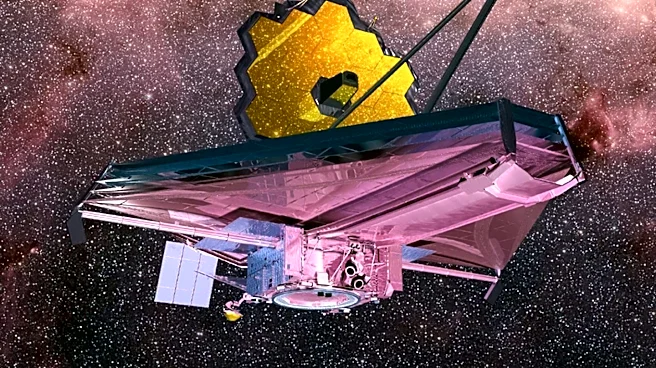
The discovery highlights the importance of advanced observational technology like the James Webb Space Telescope in uncovering the complexities of the early universe. It underscores the need for continued exploration and study of distant cosmic phenomena to refine our understanding of galaxy formation and evolution. The findings also raise questions about the processes that lead to the rapid development of heavy elements and their distribution in the universe, which could have implications for the formation of stars and planets.