





What's Happening?
China and Russia are working together at the United Nations to address and de-escalate tensions in the Middle East. Chinese Foreign Minister Wang Yi has communicated with Russian Foreign Minister Sergei Lavrov, expressing China's willingness to cooperate
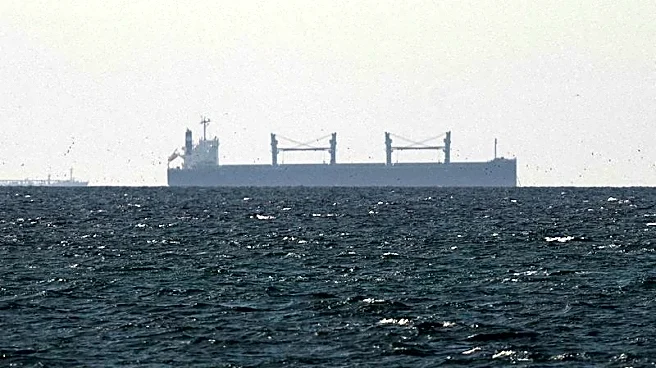
with Russia at the UN Security Council. The focus is on resolving navigation issues in the Strait of Hormuz by advocating for a ceasefire and political settlement through dialogue and negotiation. This diplomatic effort is part of a broader initiative by China, which includes a recent peace proposal with Pakistan aimed at achieving an immediate ceasefire and reopening the Strait of Hormuz. China opposes UN resolutions that authorize force to secure shipping lanes, emphasizing dialogue over military measures.
Why It's Important?
The collaboration between China and Russia at the UN highlights a significant diplomatic effort to stabilize a critical region. The Strait of Hormuz is a vital shipping route for global oil and gas supplies, and its closure due to conflict poses a threat to international energy markets. By advocating for a ceasefire and political negotiation, China and Russia aim to prevent further escalation that could disrupt global trade and energy supplies. This approach also reflects China's growing role in international diplomacy, seeking to position itself as a mediator in global conflicts. The outcome of these efforts could influence international relations and the balance of power in the Middle East.
What's Next?
The upcoming UN Security Council vote on a Bahraini resolution to protect commercial shipping in the Strait of Hormuz will be a critical next step. China and Russia, as permanent members of the Security Council, are expected to play a pivotal role in shaping the outcome of this vote. Their stance on the resolution will likely impact international support and the broader geopolitical dynamics in the region. The international community will be watching closely to see if these diplomatic efforts lead to a sustainable resolution and whether they can prevent further conflict in the Middle East.