


What's Happening?
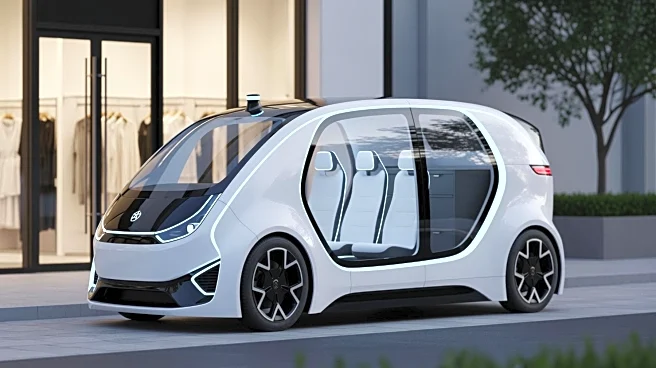
Ikea China has successfully deployed self-driving vehicles in Anhui Province following a pilot program aimed at reducing customer waiting times. The initiative involves using autonomous vehicles to transport customer orders from an external warehouse
to the Ikea Hefei store for self-pick-up and to restock in-store products. Since the start of the pilot, these vehicles have traveled nearly 75,600 kilometers, significantly cutting average waiting times from six hours to two. The initiative has also reduced transportation costs by over 50%, presenting a cost-effective model for smaller stores.
Why It's Important?
The deployment of self-driving vehicles by Ikea China marks a significant advancement in retail logistics and customer service. By reducing waiting times and transportation costs, Ikea enhances the shopping experience and operational efficiency. This move reflects a broader trend in the retail industry towards automation and technology-driven solutions to improve service delivery. The success of this initiative could influence other markets and retailers to adopt similar technologies, potentially transforming supply chain operations and customer interactions globally.
What's Next?
Following the success of the pilot, Ikea plans to permanently implement the self-driving vehicle service at its Hefei store and is evaluating other markets for potential adoption. The company will likely continue to explore autonomous delivery options, considering legislative and infrastructural factors in different regions. As the technology proves effective, it may lead to broader implementation across Ikea's global operations, setting a precedent for other retailers to follow suit in embracing automation for enhanced customer service.