






What's Happening?
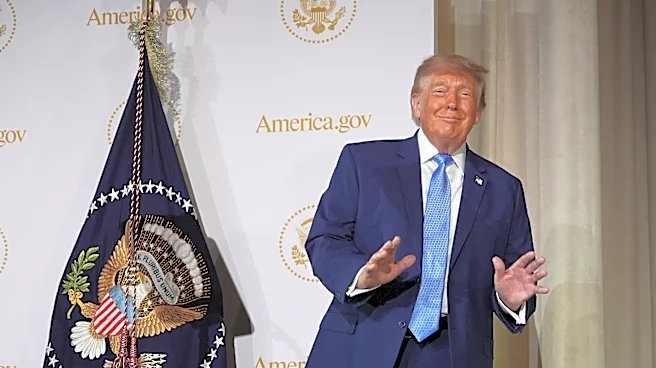
President Trump signed an executive order on September 29, directing all executive branch agencies to replace the terms "artificial intelligence" and "AI" with "super intelligence" and "SI" in official communications, websites, reports, policy documents,
and other non-statutory materials. The order, titled "Inaugurating the Era of Super Intelligence," aims to reflect the administration's view of the expanding capabilities of advanced AI systems. According to a White House fact sheet, the term "Super Intelligence" better conveys the true potential of these technologies to unlock human creativity and achieve previously impossible feats, rather than merely imitating or automating human intelligence. The order also mandates the assistant to the president for science and technology to submit proposed legislative language within 60 days to establish a federal definition of SI and assess potential changes to existing statutory references to AI. This linguistic change does not require agencies to revise previously issued regulations, presidential actions, contracts, or historical documents.
Why It's Important?
This executive order signifies a deliberate effort by the Trump administration to reframe the public and governmental perception of advanced technological capabilities. By shifting terminology from 'artificial intelligence' to 'super intelligence,' the administration aims to emphasize the transformative and powerful nature of these technologies, potentially influencing public discourse, investment priorities, and policy development. While the immediate change is linguistic and does not alter existing statutory definitions of AI, it creates a terminology challenge for governance programs. Organizations may encounter 'SI' in federal agency materials while legal frameworks and internal policies continue to use 'AI,' leading to potential confusion or the need for dual vocabularies. This move could also be seen as an attempt to project American leadership in the rapidly evolving field of advanced computing, aligning with the White House's assertion that the U.S. is the birthplace of AI and has guided its development for decades.
What's Next?
Within 60 days of the executive order, the assistant to the president for science and technology is tasked with submitting proposed legislative language. This proposal will aim to establish a federal definition of "super intelligence," assess whether existing statutory references to AI should be modified or replaced, and recommend any additional presidential or executive actions needed for implementation across the executive branch. This process will involve careful consideration of how the new terminology integrates with current legal and operational frameworks. Stakeholders in the technology sector, legal community, and government will closely monitor these developments to understand the practical implications of this terminological shift. The administration's new America.gov portal, which utilizes advanced AI systems, is already being described using the new 'super intelligence' terminology, indicating a rapid adoption within federal initiatives.
Beyond the Headlines
The rebranding of 'artificial intelligence' to 'super intelligence' carries deeper implications beyond mere semantics. It reflects a philosophical shift in how the government perceives and communicates about advanced technology. The term 'artificial' can imply mimicry or a lack of genuine intellect, while 'super intelligence' suggests a superior, perhaps even transcendent, form of cognitive ability. This change could influence public expectations, ethical considerations, and the regulatory landscape surrounding these technologies. It might also subtly encourage a more ambitious and less cautious approach to development and deployment, given the emphasis on 'unlocking new forms of human creativity' and achieving the 'previously impossible.' The long-term impact could be a reorientation of research funding, policy debates, and international collaboration, all framed under the banner of 'super intelligence' rather than 'artificial intelligence.'